
Malware Prevention
Stop malware, known and unknown.
Cato Malware Prevention delivers a multi-layered approach.

Today’s Challenges
Malware hides to get in.


Zero-day & polymorphic malware
Novel and shape-shifting malware slips past signature-only engines that only recognize yesterday’s known threats.
Zero-day malware
TLS blind spot
Evasion
Appliance limits
Our approach
Block known threats.
Detonate the unknown.
Known and unknown malware now hides inside encrypted traffic and evasive files. Cato applies multi-layered, AI-driven prevention and sandboxing at wire speed, inspecting every file — including inside TLS — so threats are stopped before they reach a user.


Inspect every file
Scan every file at wire speed, including inside TLS-encrypted traffic — with no appliance limits on what gets inspected.

Detect with AI + signatures
NGAM, in partnership with SentinelOne, and a continuously updated signature and heuristics database return a verdict in under a millisecond.

Detonate the unknown
Send suspicious files to Cato Sandbox for deep behavioral analysis and forensic reports with IOCs.
White Paper
Cato Networks Advanced Security Services
How it works
Malware Prevention Capabilities
NGAM + SentinelOne ML
Real-time protection from zero-day malware
Cato’s NGAM detects zero-day and polymorphic malware in real time, returning a verdict of benign, suspicious, or malicious.
ML maps connections across thousands of data points
Verdict in typically under a millisecond
Built in partnership with SentinelOne
Wire-speed signatures & heuristics
Always up-to-date protection
Cato scans every file at wire speed against a signature and heuristics database that is continuously updated.
Replace anti-malware engines of legacy firewalls and UTMs
No manual infrastructure to manage
No fixed-appliance resource constraints
See it in action
Watch how Cato does it

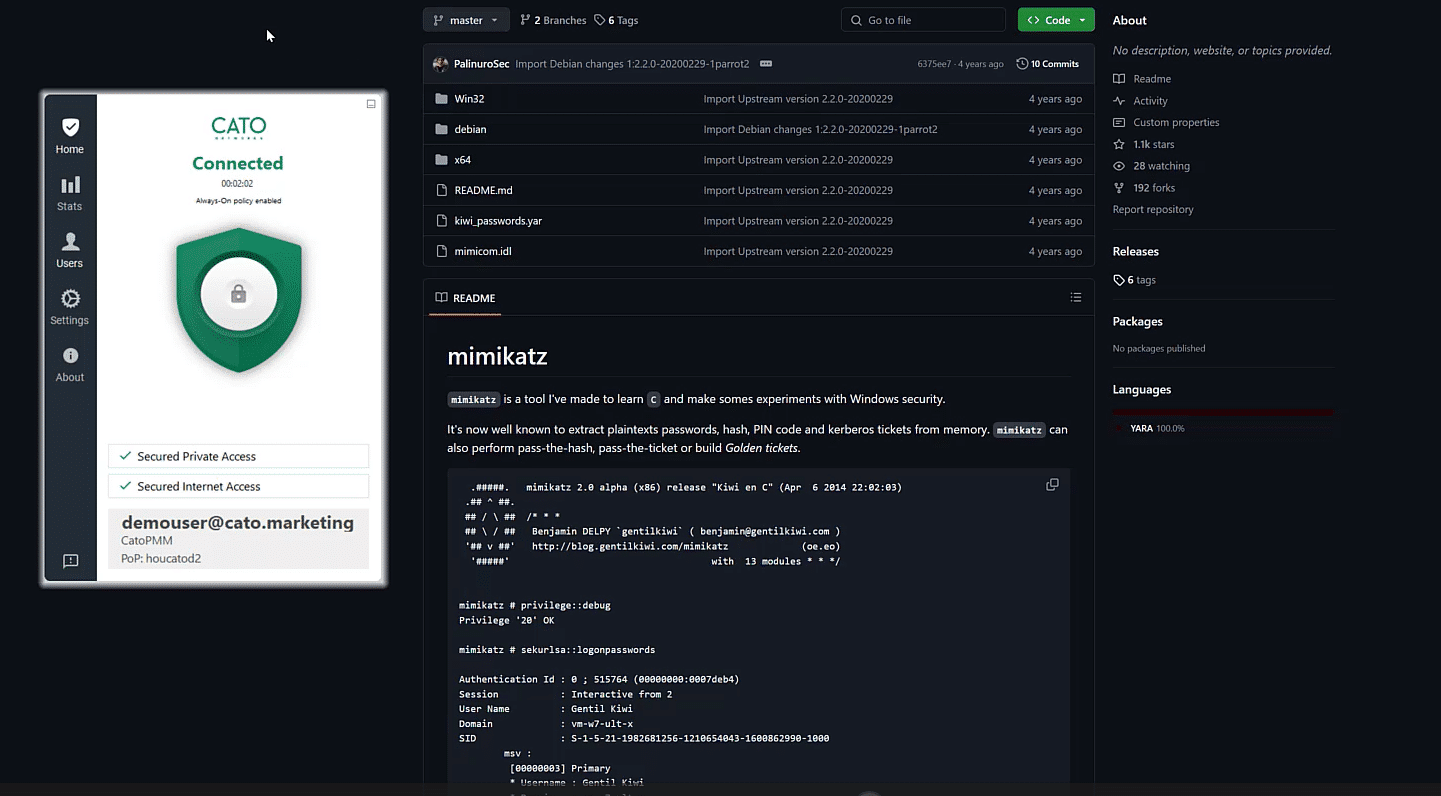
Next Generation Anti-Malware Demo Video

Cato Sandbox Demo Video

Customer Stories
Customers love Cato
“
Cato gives us secure access with encryption, Web filtering, IPS, next-gen anti-malware, and visibility of what our workers are doing, so that our clients can be confident in the quality of the connection coming into them.
Shayne Green
Head of Security Operations, CloudFactory

Matteo Daina
CIO, Gnutti Carlo Group

Nachman Cohen
CTO, CIAL Dun & Bradstreet
IT Leader
Professional Services Firm
Tomio Kushiyama
Head of IT, JUKI
Get a live demo
Secure every interaction across the enterprise, cloud, and AI with the only purpose-built SASE platform.
What to expect

15–30 minute session with a SASE product expert

Discuss your use cases and how we can help

Live product demonstration where applicable
Get Started
See Cato in Action
What’s new
Latest resources and insights


White Paper

Solution Brief
FAQS
Answers to common questions
What threats does Cato Malware Prevention protect against?2 questions
What is Cato Malware Prevention and what does it protect against?
Cato Malware Prevention is a multi-layered cloud-native security capability that protects against both known and unknown threats, including zero-day malware, polymorphic malware, and threats hidden inside TLS-encrypted traffic or nested archives. It combines real-time AI-driven detection, continuously updated signatures and heuristics, and behavioral sandboxing into a single converged platform with no appliances to deploy.
What evasion techniques does Cato Malware Prevention address?
The platform is designed to counter common evasion tactics including zero-day exploits, malware hidden inside TLS-encrypted traffic, and payloads buried in nested archives and encrypted files that are often used to bypass traditional security engines.
How does Cato detect and analyze advanced malware?4 questions
How does zero-day malware protection work in a cloud-native platform?
Cloud-native zero-day protection analyzes file content in real time using machine learning models that map connections across thousands of data points, rather than relying solely on known signatures. This allows the platform to classify files as benign, suspicious, or malicious even when no prior signature exists, typically returning a verdict in under a millisecond.
How does Cato NGAM detect zero-day and polymorphic malware?
Cato’s Next-Generation Anti-Malware (NGAM), built in partnership with SentinelOne, uses machine learning to analyze file content in real time. It maps connections across thousands of data points and returns a verdict of benign, suspicious, or malicious in typically under a millisecond, providing consistent global protection without manual infrastructure management.
Can the platform inspect malware hidden inside encrypted traffic?
Yes. Cato scans every file at wire speed, including files inside TLS-encrypted traffic. Because the platform is cloud-native, there are no fixed-appliance resource constraints limiting what gets inspected, which means encrypted traffic does not create the performance bottlenecks common with legacy hardware appliances.
What happens when a suspicious file is detected?
Suspicious files are sent to Cato Sandbox, where they are detonated in an isolated environment for deep behavioral analysis. The sandbox produces rich forensic reports that include Indicators of Compromise (IOCs), giving security teams the detail they need to investigate and accelerate incident response.
How does cloud-native malware prevention fit into enterprise security?3 questions
How does a cloud-native approach to malware prevention compare to legacy firewalls and UTMs?
Legacy firewalls and UTMs rely on fixed-appliance resources and anti-malware engines that require manual infrastructure management and can be constrained by hardware limits. Cato replaces those engines with a continuously updated, cloud-delivered service that scans every file at wire speed with no appliance limits, no manual updates, and no resource ceilings that force tradeoffs between performance and inspection coverage.
Is Cato Malware Prevention part of a broader security platform?
Yes. Cato Malware Prevention is part of the converged Cato SASE Cloud platform, which brings together networking and security capabilities into a single cloud-native solution. This means malware prevention works alongside other security services without requiring separate appliances or point products to manage.
Who uses Cato Malware Prevention?
Cato serves enterprises across a range of industries. Customer references include Swissport, Carlsberg, and O-I, with use cases spanning global IT infrastructure protection, visibility, and security at scale.


