
Cato XOps
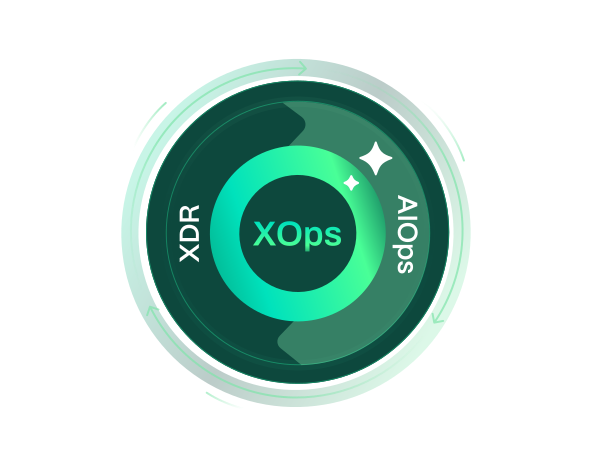
XDR and AIOps,
converged.
Cato XOps unifies security and network telemetry on one cloud-native platform, turning raw signals into prioritized stories so teams resolve incidents faster.
Today’s Challenges
Disconnected operations slow every response.

Alert Overhead Slows Down Response
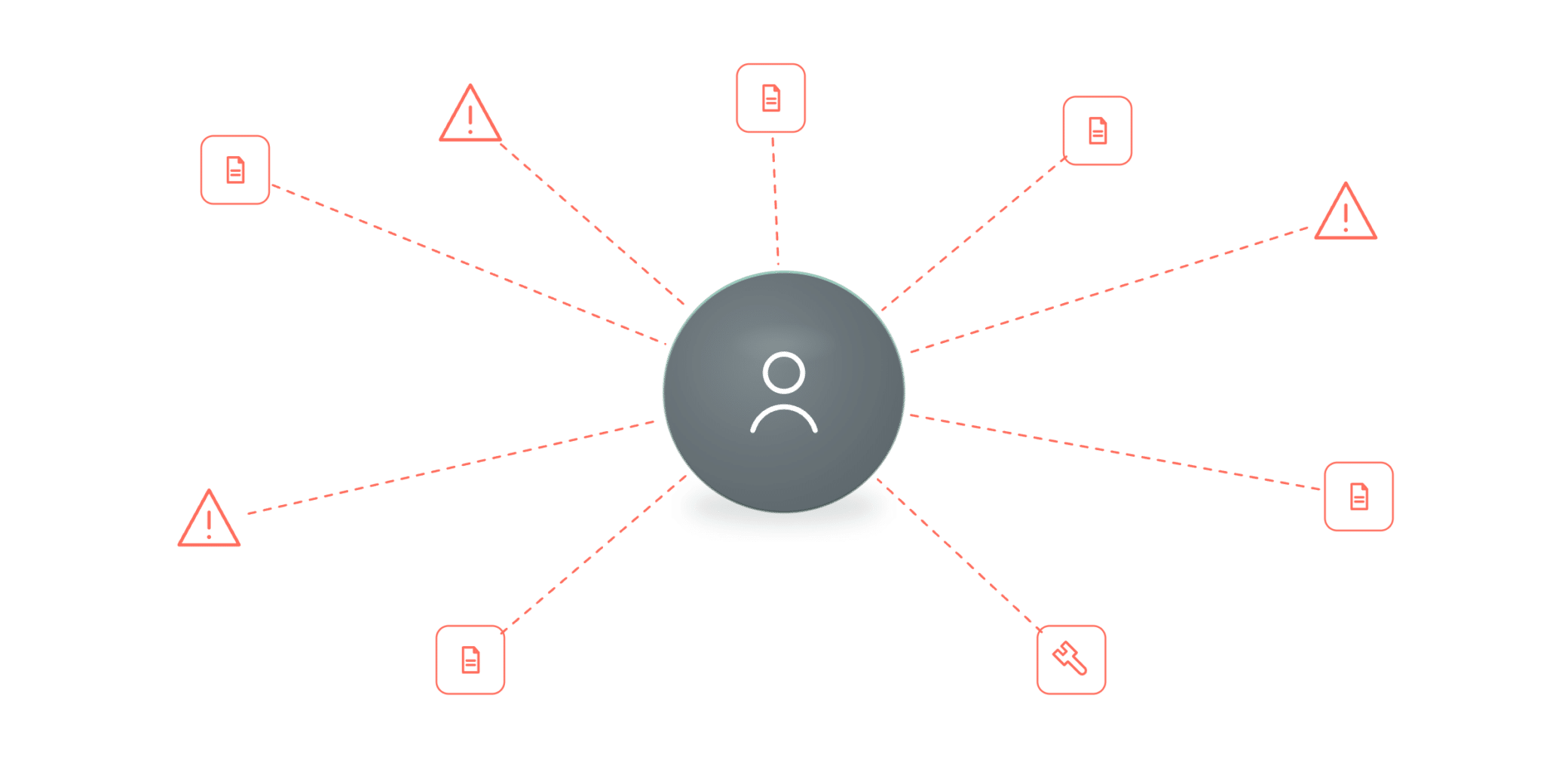
Too many alerts across too many tools make it hard to prioritize threats and respond quickly.
Alert overhead
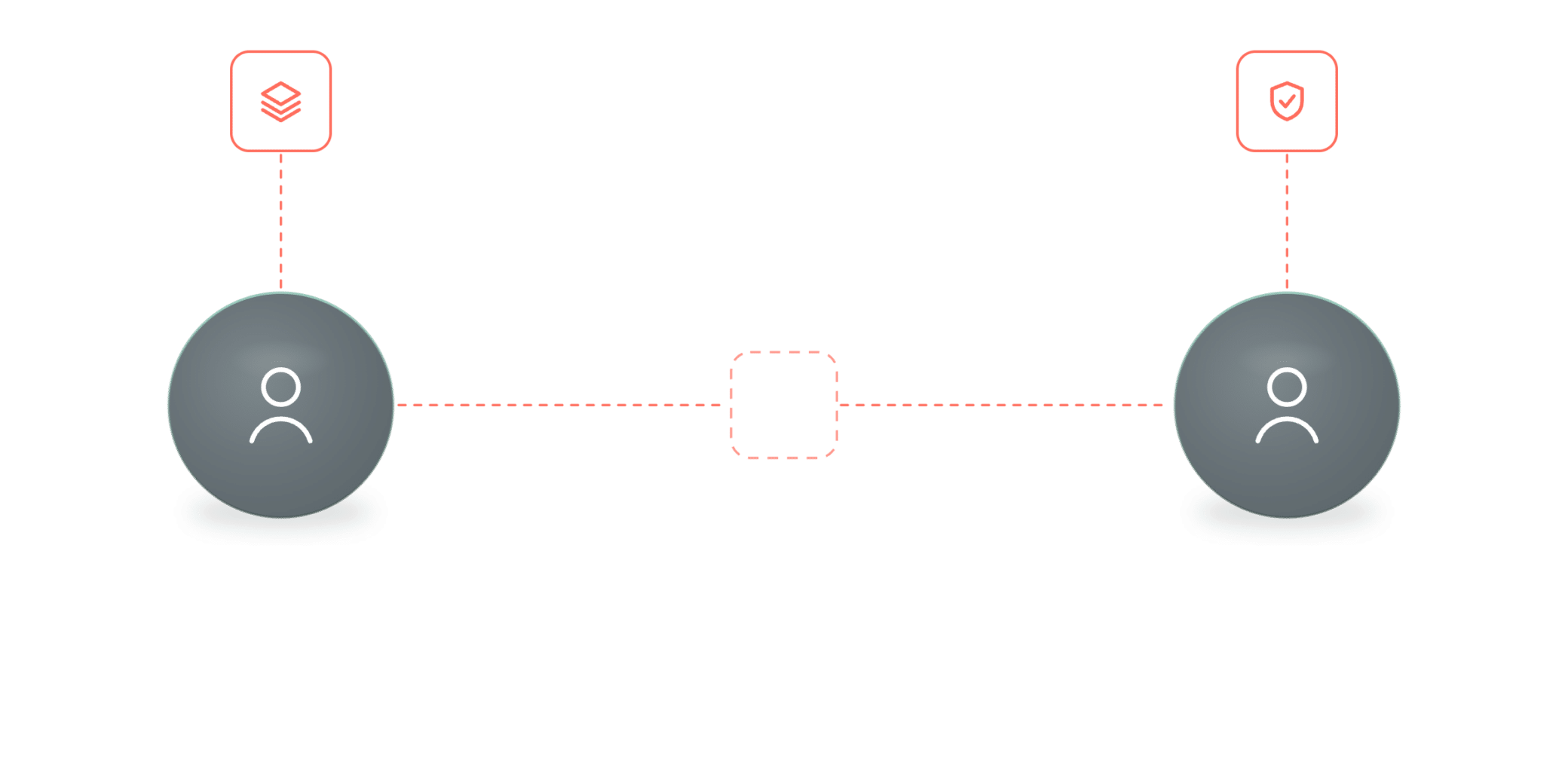
Siloed tools
Fragmented data
Our approach
Unify XDR and AIOps at Enterprise Scale
Network and security operations split across teams and tools slow everyone down. Cato XOps unifies them on shared data and AI, so NetOps, SecOps, and platform teams work from one source of truth and resolve issues faster.


Converge SOC and NOC
Bring SOC and NOC together on one cloud-native platform that unifies security and network telemetry.

AI-Powered Insights Layer
Turn raw telemetry into prioritized, actionable stories — for simpler operation and faster decisions.

Empower IT and Security
Give both teams shared context and guided workflows to investigate and resolve incidents together.
White paper
The Industry’s First SASE-Based XDR Has Arrived
How it works
One platform that turns telemetry into action.
Network operations
Resolve Network and Performance Issues Faster
Monitor connectivity, performance, and reliability across the SASE environment to detect issues early. By correlating network telemetry, user-experience signals, and service-health data, teams pinpoint performance issues faster, see business impact clearly, and move from troubleshooting to resolution.
Security operations
Accelerate Security Investigation and Response
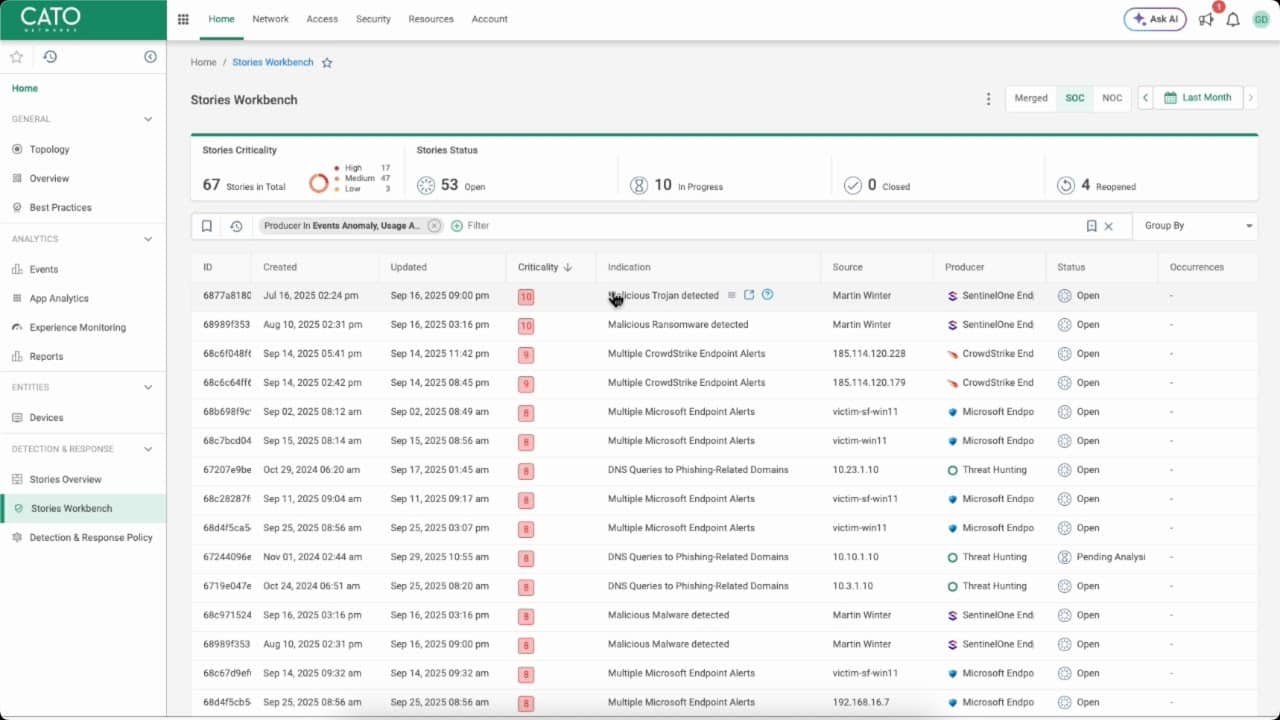
Turn large volumes of security events into clear, actionable stories. By correlating related signals and adding meaningful context, teams reduce alert fatigue, focus on the incidents that matter most, and move faster from detection to investigation and response.
Managed services
Extend XDR with Expert-Led MDR
Augment your internal team with managed detection and response built on the Cato SASE Platform. Cato MDR helps you investigate threats faster, prioritize incidents more effectively, and accelerate remediation with expert analysts, continuous monitoring, and the same shared context used across Cato XOps.
Shared operations
Unify SOC and NOC Operations
Give security and operations teams a shared view across users, devices, applications, and infrastructure. By bringing security and operational insights into one experience, teams work from the same context, align faster on priorities, and respond more effectively to both threats and performance issues.
Why XOps
Solving for Today’s Security and Operations Demands
Cato XOps delivers on modern security and operations needs with the clarity of actionable stories, the shared context of unified insights, and the speed of AI-driven investigation and resolution.

Operational Clarity

Turn large volumes of events into clear, prioritized stories.
Reduce alert noise and simplify triage.
Help teams focus on the incidents that matter most.
Improve day-to-day efficiency across security and operations.

Shared Context
Give SOC and NOC teams one view across users, devices, apps, and infrastructure.
Correlate signals across security and operational domains.
Reduce blind spots caused by siloed tools.
Improve coordination with a common operational picture.

Faster Resolution
Speed investigation with correlated context and guided workflows.
Identify root cause faster across threats and performance issues.
Move more quickly from detection to remediation.
Lower operational effort while improving response time.
See it in action
Watch how Cato does it

XDR meets AIOps
Get a live demo
Secure every interaction across the enterprise, cloud, and AI with the only purpose-built SASE platform.
What to expect

15–30 minute session with a SASE product expert

Discuss your use cases and how we can help

Live product demonstration where applicable
Get Started
See Cato in Action
What’s new
Latest resources and insights


SOLUTION BRIEF
Cato XOps: XDR and AIOps Solution Brief
WEBINAR
Turn Billions of Events into Actionable Stories
WHITE PAPER
The Industry’s First SASE-Based XDR Has Arrived
WEBINAR
The Industry’s First Converged SASE and XDR
FAQS
Answers to common questions
How does Cato XOps unify security and network operations?3 questions
What is Cato XOps?
Cato XOps is the AI-driven insights layer of the Cato SASE Platform. It brings security detection and response (XDR) together with AIOps, turning raw security and network events into prioritized stories that teams can investigate and act on.
How does a unified XDR and AIOps approach compare to running separate security and network operations tools?
Separate XDR and AIOps tools often split the evidence between different teams, logs, data sets, and workflows. Cato XOps works from the shared context already in the Cato SASE Platform, so security and network teams can investigate incidents, performance issues, and operational risks from the same story-driven workflow.
Who is Cato XOps designed for?
Cato XOps is designed for SecOps, NetOps, and IT operations teams that need a common operating view across the Cato environment. It is especially useful for organizations that want to bring SOC and NOC workflows closer together, reduce manual correlation work, and prioritize the issues that need action first.
How does Cato XOps turn raw signals into actionable stories?3 questions
What problems does Cato XOps solve?
Cato XOps helps reduce alert noise, tool silos, and slow root-cause analysis. Instead of asking SecOps and NetOps teams to piece together context from separate consoles, it correlates security, networking, endpoint, identity, and operational signals into clearer investigation stories with guided remediation.
What are the core use cases Cato XOps supports?
Cato XOps supports security investigation, threat hunting, user and entity behavior analysis, site operations, endpoint alert correlation, and networking issue detection. In practice, that means it can help teams investigate potential attacks, detect unusual behavior, troubleshoot issues with network and application experience, and review affected users, devices, sites, and traffic flows in one place.
How does the AI-powered insights layer work?
Cato XOps uses AI, machine learning, and correlation engines to analyze signals from the Cato SASE deployment and supported integrations. It connects related events, prioritizes what matters most, and turns them into clear, actionable incident stories. The platform also gathers additional context, helps teams investigate root causes, and provides guided remediation recommendations to speed up response times.
How does Cato XOps extend investigation and response across the platform?2 questions
Can organizations that need additional support beyond their internal team use Cato XOps?
Yes. Organizations that want managed security support can use Cato MDR alongside XOps. Cato MDR adds expert security analysts and continuous monitoring for security stories, while XOps provides the shared story workflow, investigation context, and remediation guidance inside the Cato environment.
Does Cato XOps require deploying a separate product alongside an existing SASE environment?
No. Cato XOps is natively built into the Cato SASE Platform, not deployed as a separate product. It leverages the Cato shared data lake and native telemetry to provide AI-driven detection, investigation, and response, while integrating with existing SIEM and ITSM workflows.


