
Cato CTRL Threat Research: Suspected China-Linked Threat Actor Targets Global Manufacturer with Undocumented TencShell Malware




|
Listen to post:
🔊 This audio player requires that "Preferences" cookies be accepted
|
Executive Summary
In April 2026, Cato CTRL identified and blocked an attempted intrusion against a global manufacturing customer involving TencShell, a previously undocumented, Go-based implant derived from the open-source Rshell C2 framework.
The activity appeared in traffic associated with a third-party user connected to the customer environment.
The attack chain used a first-stage dropper, Donut shellcode, a masqueraded .woff web-font resource, memory injection, and web-like C2 communication. We assess the activity as suspected China-linked based on the apparent Rshell lineage, Tencent-themed API impersonation, and infrastructure patterns, While this pattern is relevant to our suspected China-linked assessment, it is not sufficient on its own for attribution.
If successful, TencShell could have given the attacker remote command execution, in-memory payload execution, proxying, pivoting, system profiling, and a path to deploy additional tooling. We blocked the attempt before the attacker could establish durable remote control.
Why This Matters
A C2 framework deployed through third-party access can turn a trusted business connection into an attacker-controlled bridge. If TencShell had installed successfully, the attacker could potentially execute commands, inspect files, steal credentials or session material, stage additional tools, proxy traffic through the endpoint, and move toward internal systems that are not directly exposed to the internet.
For a global manufacturer, the business risk extends beyond one host. A compromised endpoint connected to a regional site can expose supplier relationships, production workflows, intellectual property, customer data, logistics processes, and business continuity. The first payload does not need to be destructive to be dangerous, a C2 framework gives the attacker the control needed to decide what comes next.
2026 Cato CTRL™ Threat Report | Download the reportFrom Rshell to TencShell: Customization and Operational Context
The activity was observed in a global manufacturing environment with multiple regional sites, specifically at the customer’s India site. It was associated with a third-party user connected to the customer environment. The intrusion attempt became clear once we correlated the full picture: suspicious external infrastructure, host-level artifacts, payload-staging behavior, and C2-like communication. Together, those signals showed an attempted malware execution chain rather than an isolated suspicious request.
TencShell is the name we use to track the customized implant observed in this investigation. We named it TencShell because it combines shell-style remote-control capabilities with C2 communication that imitates Tencent-like web service paths. Tencent is a major Chinese technology company, and attackers sometimes mimic well-known service patterns to make malicious traffic look like normal application/API activity. In simple terms, “Tenc” refers to the Tencent-looking C2 paths, and “Shell” refers to the remote shell/RAT behavior.
TencShell is derived from Rshell, an open-source Go-based C2 framework designed for cross-platform offensive security use. The original Rshell project includes remote command execution, file and process management, terminal access, in-memory payload execution, multiple C2 transports, and an MCP server. The version we observed was customized and repackaged for this operation, with communication and delivery changes that made it more suitable for the attacker’s campaign.
Embedded Go source paths in TencShell exposed the Reacon project structure and the threat actor user, as shown in Figure 1.
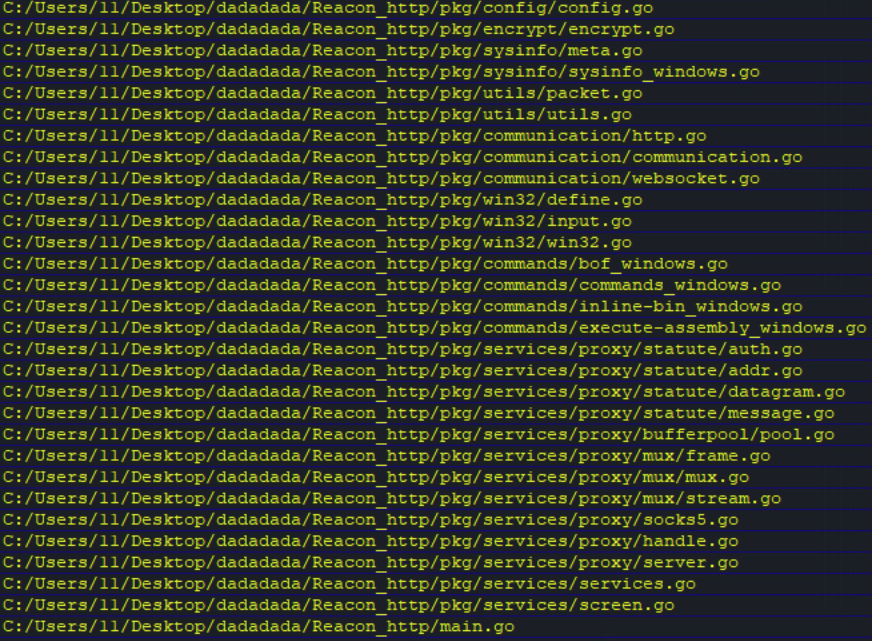
Figure 1. TencShell Go paths revealing the threat actor’s REACON project
Technical Details: TencShell Infection Chain
The initial infection vector remains unknown. It may have involved phishing, a malicious download, or another web-based delivery method. The infection chain we observed following initial access starts from the 1st-stage dropper payload.
As shown in Figure 2, the observed chain continues from the 1st-stage dropper payload to Donut shellcode retrieval through a masqueraded .woff resource, reflective shellcode execution, in-memory loading of the customized Rshell-derived framework, and attempted C2 communication with attacker-controlled infrastructure.
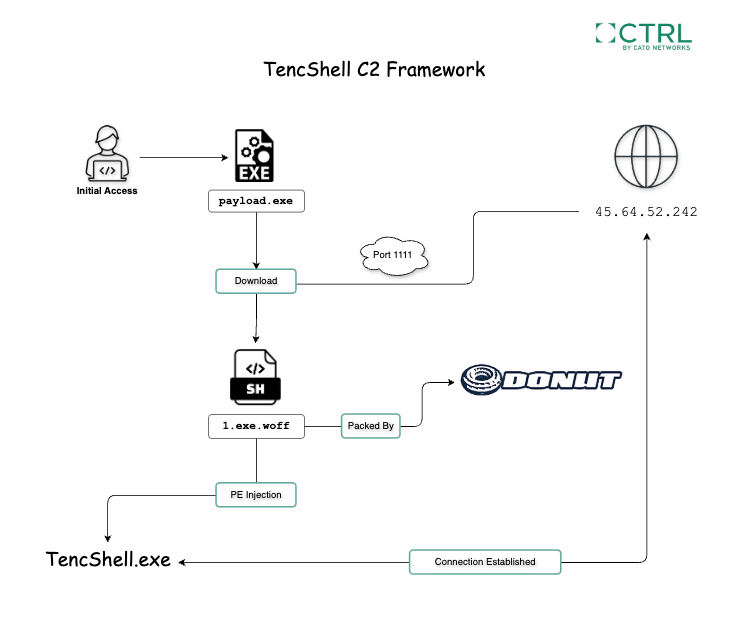
Figure 2. TencShell infection chain
The following sections break down each observed stage of the infection chain, starting from the first executable payload we identified.
Stage 1: 1st-Stage Dropper Payload
The first executable stage we observed was a 1st-stage dropper payload. As shown in Figures 3 and 4, this stage preceded the Donut shellcode retrieval and initiated the follow-on payload chain.
Instead of deploying the full C2 framework immediately, the attacker used a smaller first-stage component to retrieve or trigger the next phase of execution. This approach gives the operator flexibility: the initial component can remain lightweight, while later-stage payloads can be hosted separately, changed, or updated without modifying the first-stage payload.
In this case, the dropper did not represent the full attacker capability. It was an initial execution component that enabled the follow-on stages leading to Donut shellcode execution and in-memory loading of TencShell.
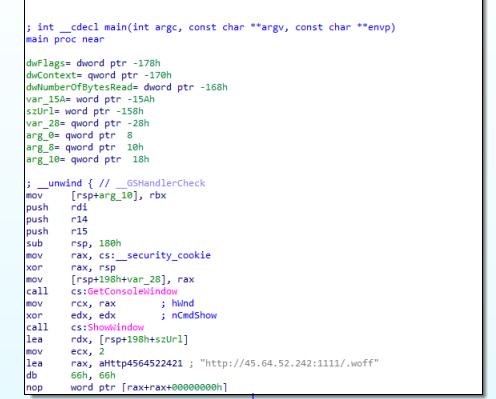
Figure 3. 1st-stage dropper communication with attacker-controlled IP
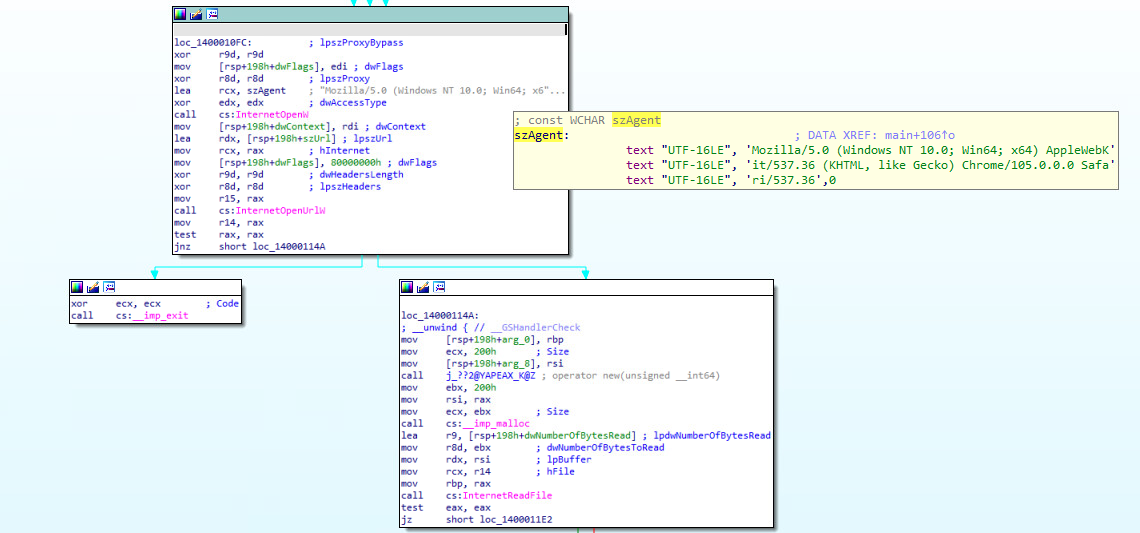
Figure 4. 1st-stage dropper HTTP request with fake User-Agent
Stage 2: Masqueraded .woff Binary
The next stage involved retrieving Donut shellcode through a masqueraded .woff resource. The request also used a fake or customized User-Agent, making the payload retrieval look more like normal browser or application traffic.
Donut is an open-source shellcode generation framework designed for in-memory execution. It can generate position-independent shellcode that loads and executes Windows payloads, including .NET assemblies, PE files, DLLs, and scripts, directly from memory. In this attack chain, Donut appears to have been used as the bridge between the staged payload and in-memory execution of the customized C2 framework.
A .woff file is normally a Web Open Font Format file. Websites use WOFF files to load custom fonts in a browser. In ordinary web traffic, requests for .woff files are common and usually benign, just like requests for images, CSS, or JavaScript.
That is why this technique is useful for attackers. By placing malicious content behind a font-looking path or extension, the attacker makes the payload request appear like a routine static web asset. The file does not need to be a legitimate font. The value is in the disguise: a security analyst or automated control may see a “font” request when the content is actually part of a shellcode delivery chain.
As shown in Figure 5, VirusTotal telemetry shows detections and URL submissions for the observed .woff payload paths, reinforcing that these resources were used as payload delivery locations rather than legitimate web-font assets.
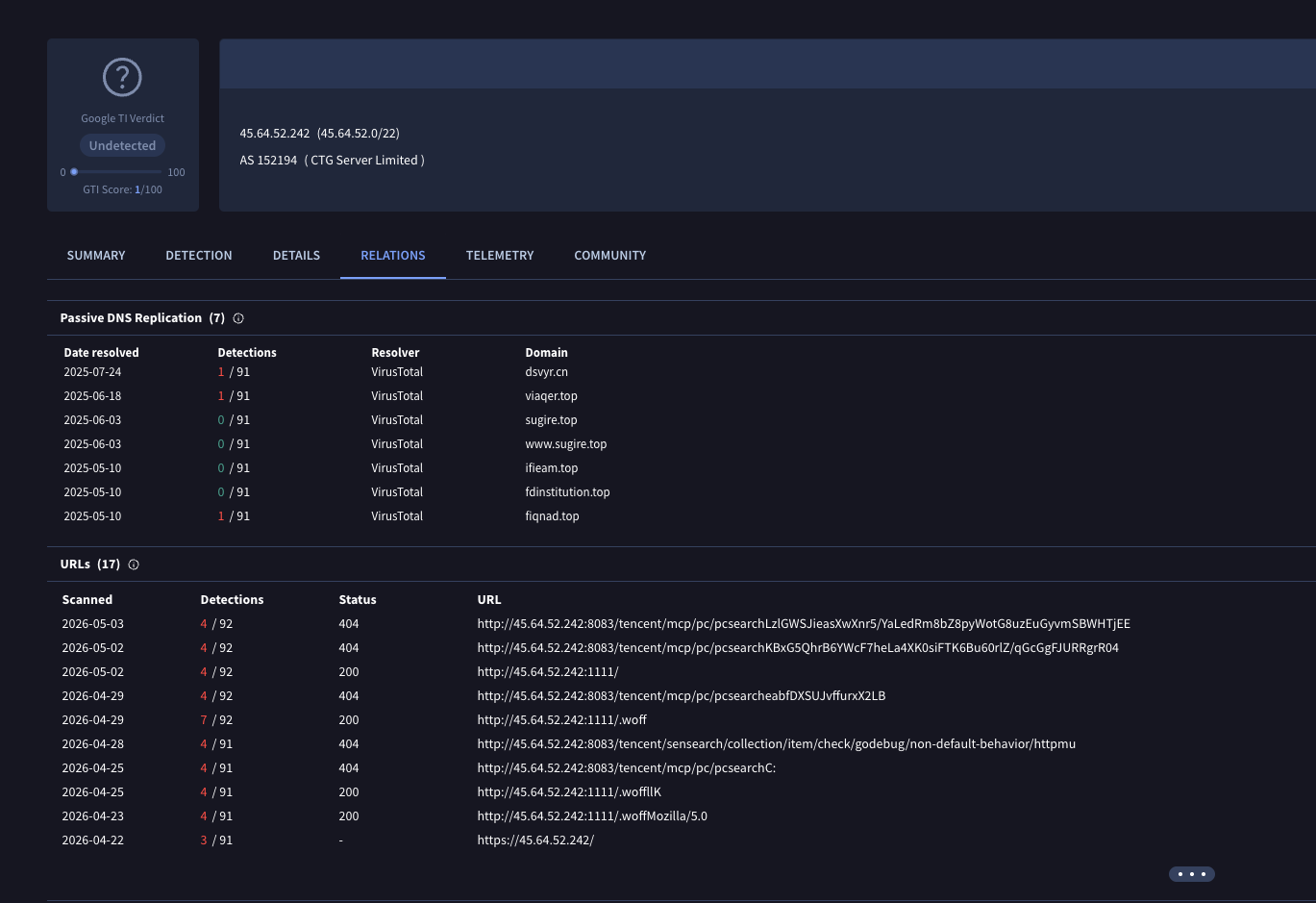
Figure 5. VirusTotal telemetry for observed .woff payload URLs
In this case, the .woff resource functioned as a masqueraded payload container. It used the appearance of a normal web font request to stage content that supported execution of the next malware phase. This helped the attacker blend payload delivery into ordinary web traffic and reduce obvious file-based visibility.
Stage 3: Reflective Shellcode Execution
After the masqueraded .woff payload was retrieved, the loader moved into a memory-resident execution workflow used to bootstrap the embedded Donut shellcode and deploy TencShell in memory.
The loader allocated a local memory region, copied the downloaded buffer into it, changed the memory protections to executable, and transferred execution through a newly created thread pointing to the staged shellcode. Execution remained inside the originating process, with no evidence of remote process injection or cross-process memory operations.
Once execution entered the shellcode region, the Donut runtime took control and reflectively loaded the embedded PE payload. This included dynamic API resolution, payload unpacking, relocation handling, import reconstruction, and manual PE mapping before invoking the TencShell entry point directly from memory.
As shown in Figure 6, the execution function is responsible for loading and executing the staged shellcode in memory.
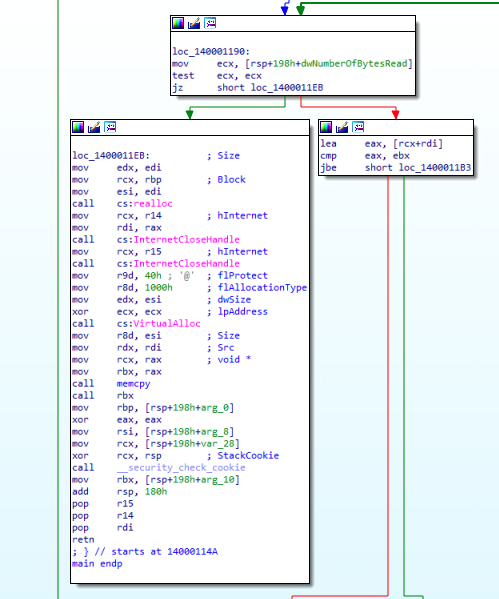
Figure 6. TencShell memory injection function
Stage 4: TencShell Loaded in Memory
After reflective shellcode execution, the customized Rshell-derived implant, which we track as TencShell, was loaded into memory. This confirmed that the payload chain successfully reached the final C2 framework stage rather than stopping at shellcode execution.
Recovered artifacts reference Reacon, helping link the in-memory payload to the customized framework derived from Rshell, the original open-source C2 framework. Throughout this report, we refer to the observed customized C2 framework as TencShell.
As shown in Figure 7, we observed the customized framework loaded inside memory.
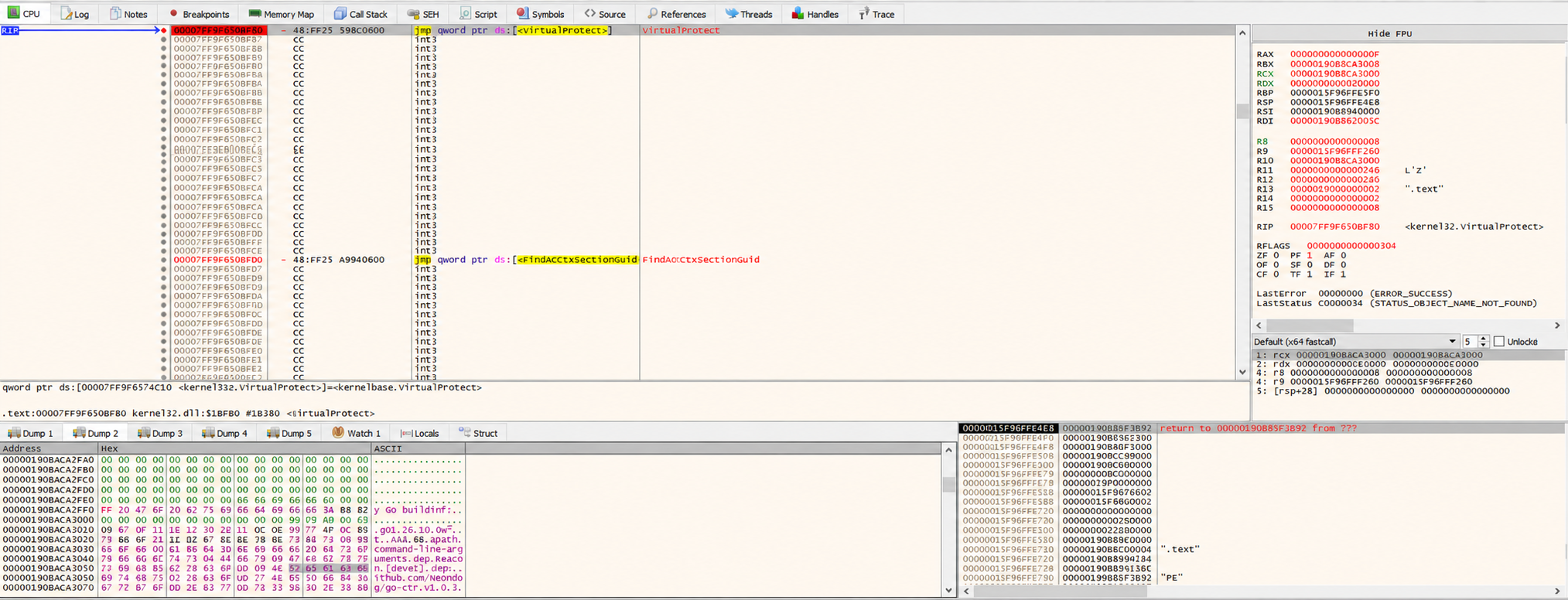
Figure 7. Debugger view showing TencShell/Reacon artifacts loaded in memory
As shown in Figure 7, the recovered artifact name Reacon appears in the customized sample. This artifact helps link the in-memory payload to the customized framework derived from Rshell, the original open-source C2 framework shown in Figure 8.
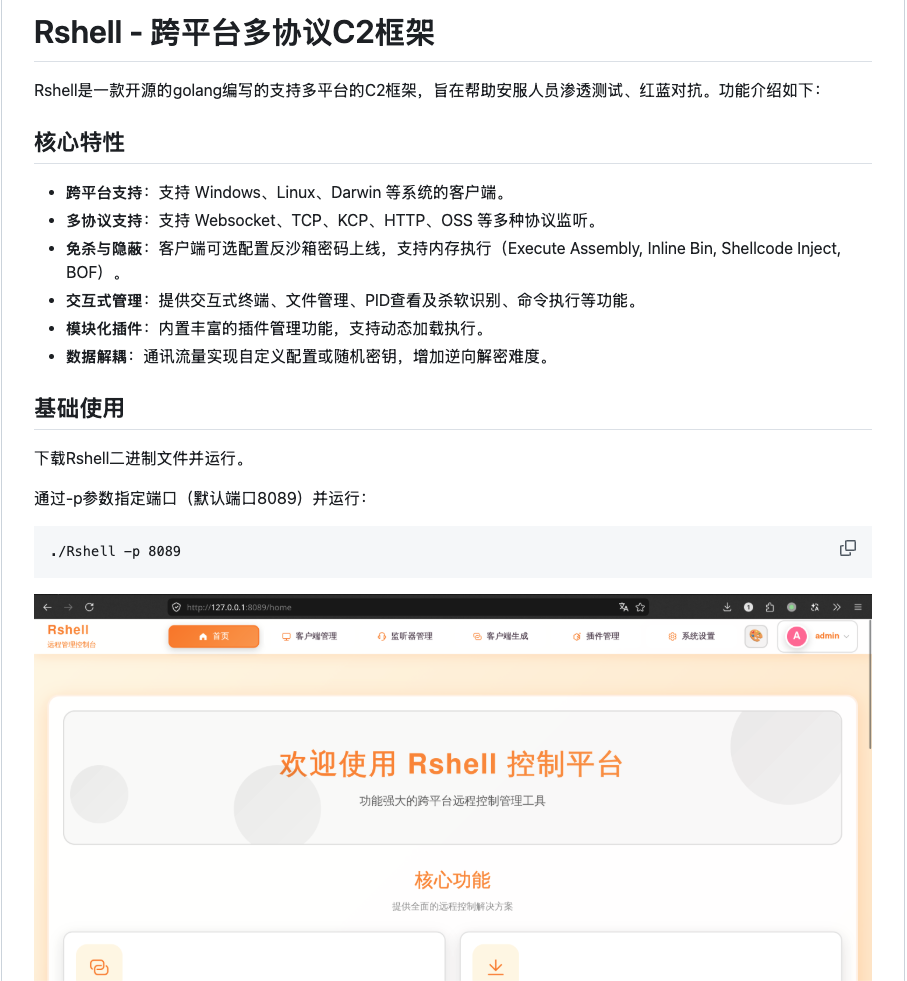
Figure 8. Rshell Github Project
Recovered project artifacts showed a modular Go framework:
Reacon
├pkg/communication/
├pkg/commands/
├pkg/services/
├pkg/win32/
├pkg/sysinfo/
└main.go
This structure is consistent with a full operator framework rather than a single-purpose backdoor. The modules indicate separation between communication, commands, services, Windows interaction, and system profiling.
Stage 5: C2 Communication
The final stage was attempted command-and-control communication. TencShell used web-like communication patterns designed to make malicious traffic harder to distinguish from normal application traffic. Instead of using obvious malware callback paths, the implant attempted to communicate through structured API-like endpoints that resembled backend service requests. As shown in figure 9 below, VirusTotal telemetry shows repeated use of Tencent-like C2 paths across attacker-controlled infrastructure. This supports the assessment that the communication pattern was not random, but part of a structured C2 design intended to resemble normal web/API activity.
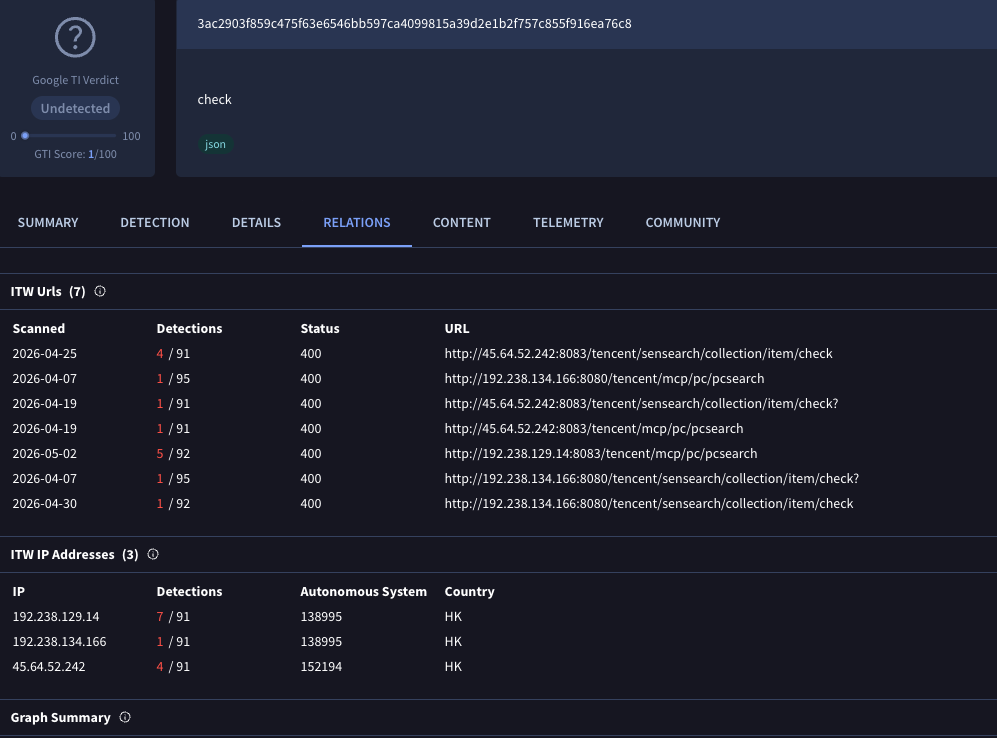
Figure 9. Tencent-like C2 paths in VirusTotal
As shown in Figure 10, the network traffic captures the attempted communication between the endpoint and attacker-controlled C2 infrastructure. This is the point in the chain where the implant attempts to establish an operator-controlled channel for tasking, command execution, and follow-on activity.
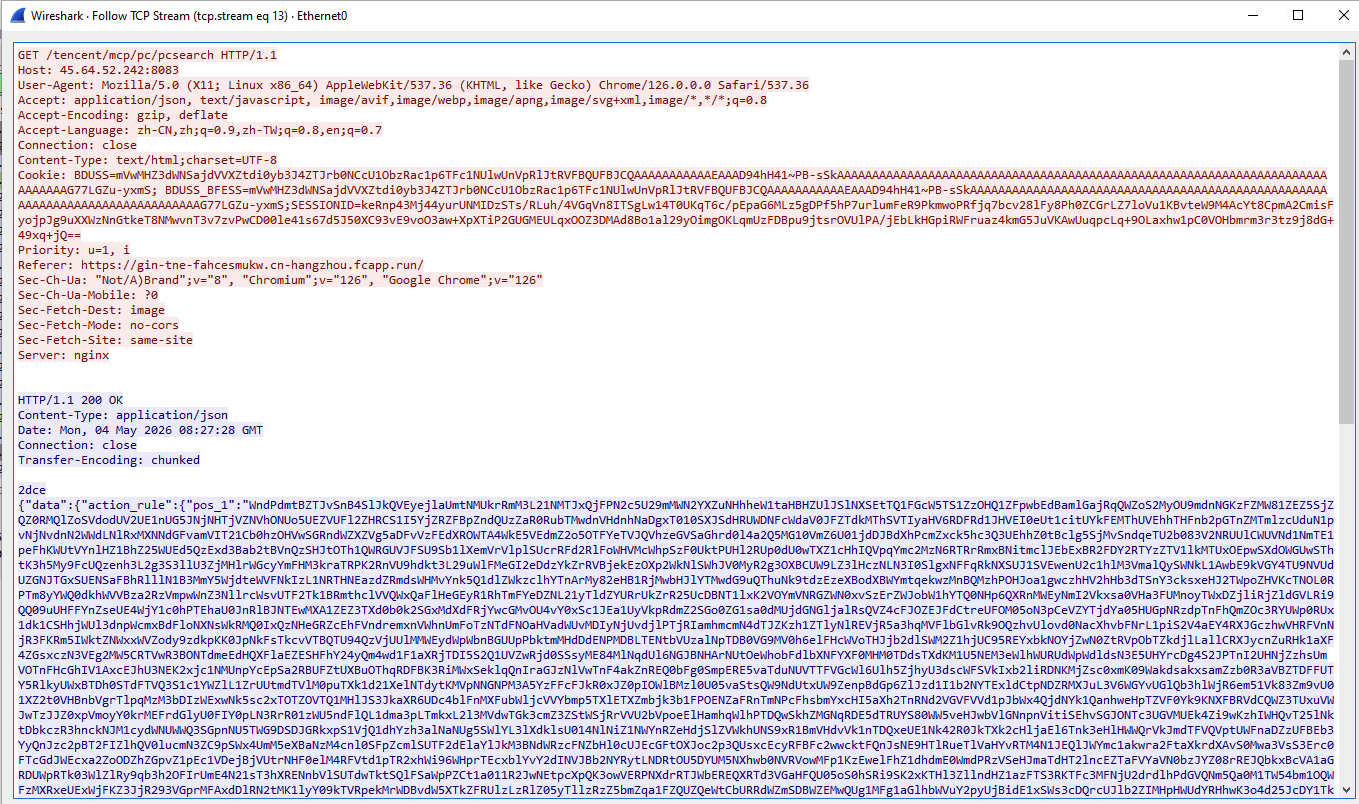
Figure 10. Wireshark capture showing attempted TencShell C2 communication
Some of the observed C2 paths used Tencent-like naming, This type of naming can help attacker-controlled traffic blend into normal web/API activity. As shown in Figure 11, the C2 panel provides the operator-side interface used to manage infected clients and issue commands. This confirms that the observed activity was part of a broader remote-control framework, not simply payload retrieval.
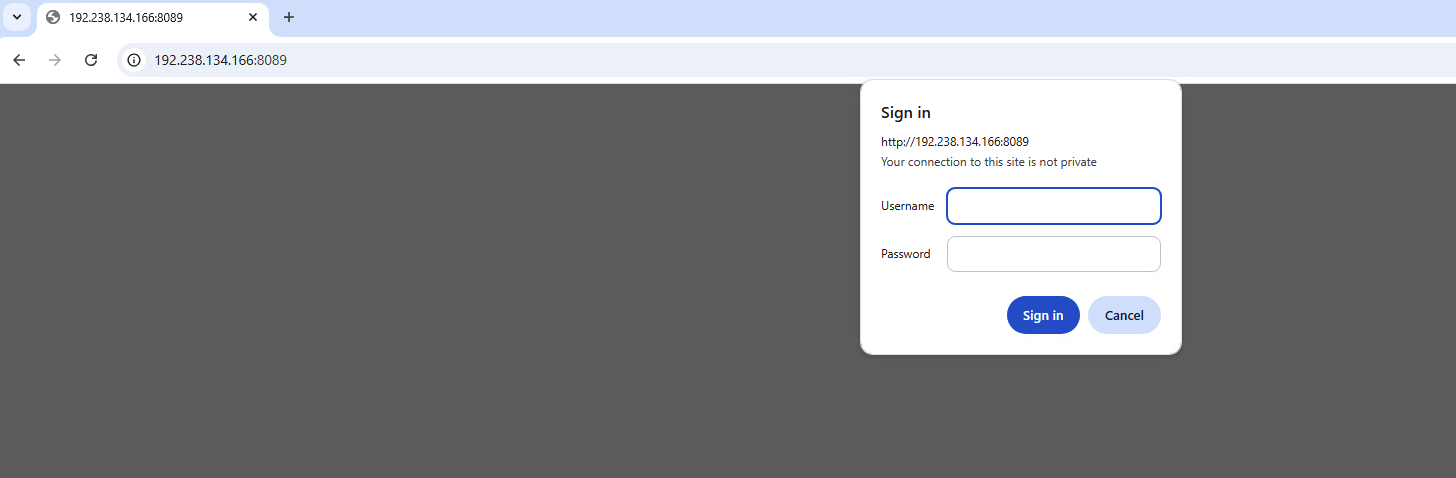
Figure 11. TencShell C2 panel used to manage infected clients and operator activity
The repeated use of similar URI structures and ports across attacker-controlled infrastructure suggests a broader operational setup, potentially supporting a wider campaign rather than a single opportunistic intrusion. The list of observed C2 and infrastructure is available in the IOC section.
Post-exploitation Capabilities
TencShell includes capabilities commonly associated with mature post-exploitation frameworks. Recovered Go module names indicate support for several high-risk operator actions, including in-memory execution, BOF-style module execution, proxying and tunneling, WebSocket-based C2, and remote interaction.
Examples of recovered components include:
Figure 12 shows extracted TencShell function names and package paths related to command communication and remote interaction. The communication package includes functions for pulling commands, pushing results, parsing HTTP responses, and opening a screen WebSocket. The win32 package includes functions for retrieving screen metrics and simulating keyboard and mouse input, such as SendInput, MouseClick, and KeyTap. Together, these recovered names support the assessment that TencShell includes interactive remote-control capabilities in addition to standard C2 communication.
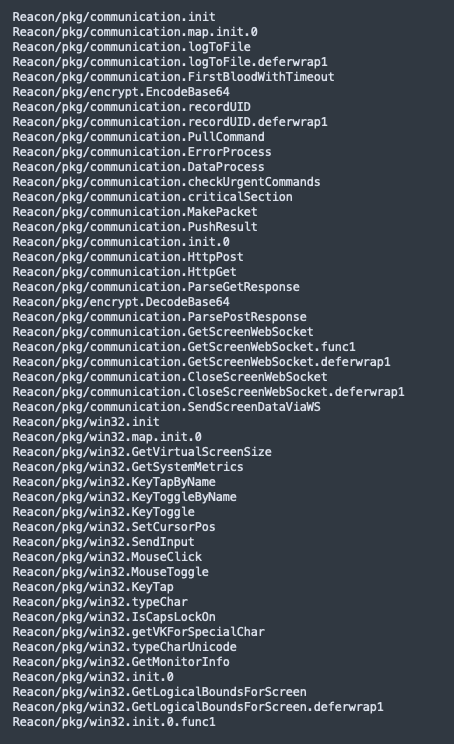
Figure 12. Extracted TencShell package paths and function names
The presence of functions such as PullCommand, PushResult, GetScreenWebSocket, SendInput, MouseClick, and KeyTap indicates that the implant supports operator-driven remote interaction in addition to standard command execution.
Beyond the recovered Go module names, TencShell exposes a broader operator toolkit. The implant includes capabilities for remote shell and native OS command execution, file and process manipulation, persistence and defense evasion, UAC bypass, screen capture or remote interaction, browser artifact access, polling-based tasking, structured C2 reporting, and SOCKS5-based proxying for pivoting.
In practical terms, this functionality could allow an attacker to execute tools with minimal file-system artifacts, run commands, profile the endpoint, tunnel traffic into internal systems, and maintain interactive control while blending C2 communication into normal web traffic. This makes TencShell more than a simple backdoor; it functions as a flexible operator framework that could support lateral movement, credential access, data theft, and follow-on payload deployment.
The opcode structure in Table 1 further reinforces this assessment. It shows a broad post-compromise command set spanning remote interaction, file access, execution, reconnaissance, persistence, and cleanup.
Table 1: Opcode-Based Capability Mapping
In practical terms, these capabilities allow an operator to remotely control the host, collect sensitive data, maintain access, and remove forensic traces.
Persistence Mechanism
In addition to the post-exploitation capabilities described above, analysis of TencShell identified a persistence routine designed to establish autorun execution through the Windows Registry Run key:\Software\Microsoft\Windows\CurrentVersion\Run
During execution, TencShell invokes Windows Registry APIs through Go runtime wrappers to access and modify registry values. The routine references the value name: OneDriveHealthTask
This name appears designed to blend in with legitimate Microsoft or Windows-related components during casual inspection. The execution flow also indicates that TencShell checks whether the persistence entry already exists before creating it, suggesting the routine supports persistence validation or reinstallation rather than a simple one-time registry modification.
As shown in Figure 13, the persistence routine references the Windows Run key and the OneDriveHealthTask value used for autorun execution.
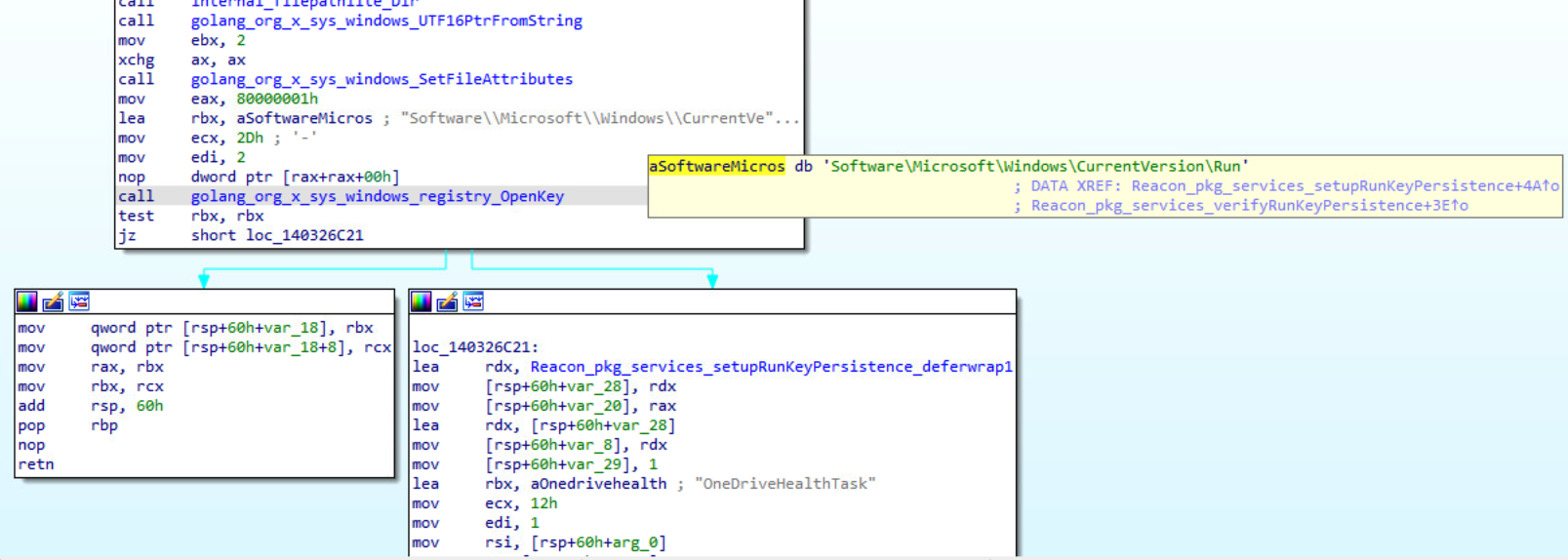
Figure 13. TencShell registry autorun persistence using the Windows Run key
Cato Protections
We blocked the attempted intrusion before the attacker could establish durable control.
The detection was based on correlation across multiple signals:
- Suspicious attacker-controlled URL
- Payload-staging behavior
- Font-like masqueraded resource
- Reuse of suspicious infrastructure and URI patterns
As shown in Figure 14, XOps surfaced the activity as a security story, connecting the suspicious destination, malware classification, source host, target actions, geolocation, and attack distribution. Figure 15 shows the related events behind the story, including repeated outbound GET requests to the same destination and URI path.
Cato MDR investigation helped confirm that the activity represented an attempted intrusion rather than isolated suspicious browsing or a benign download.
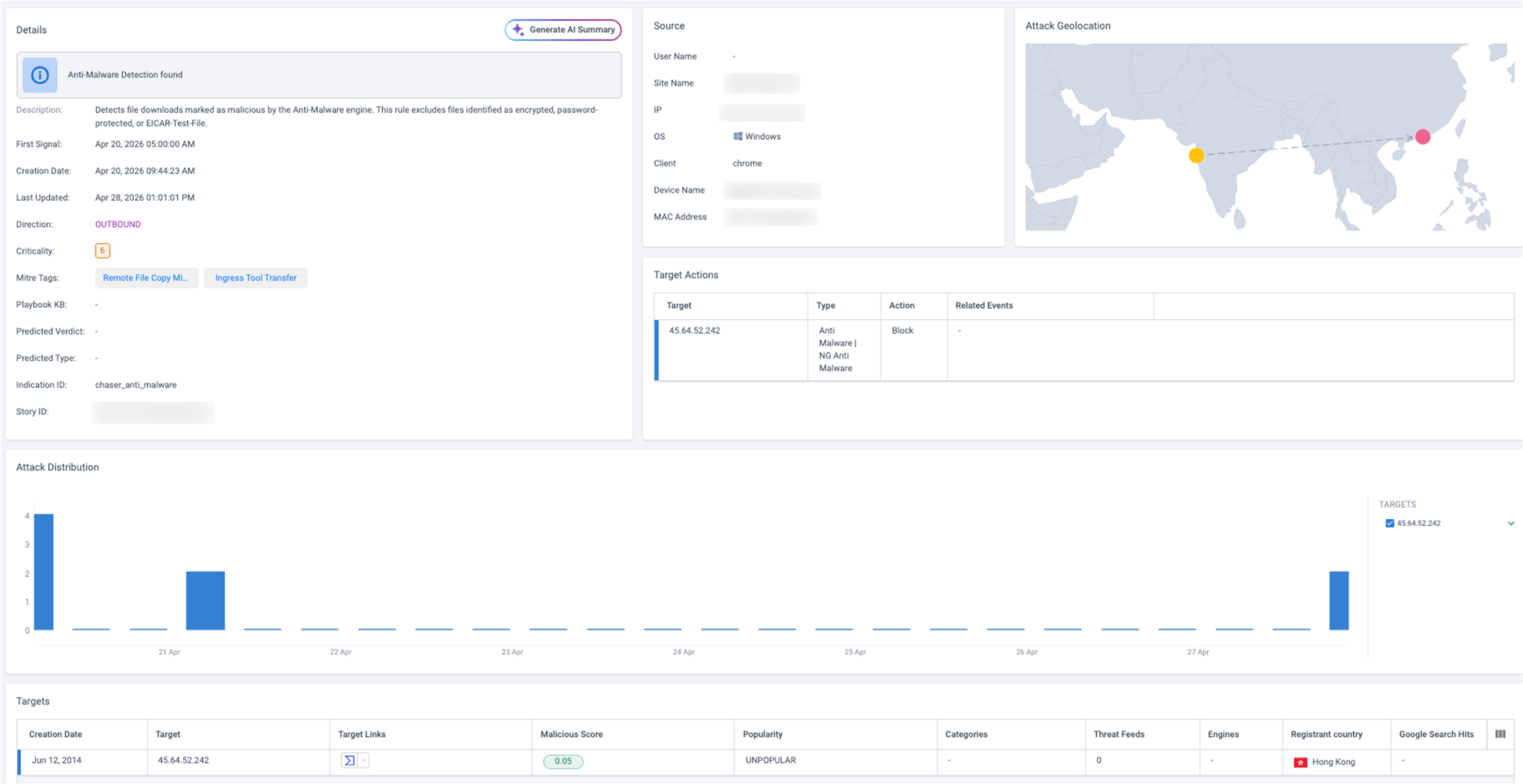
Figure 14. XOps security story for the detected malware activity
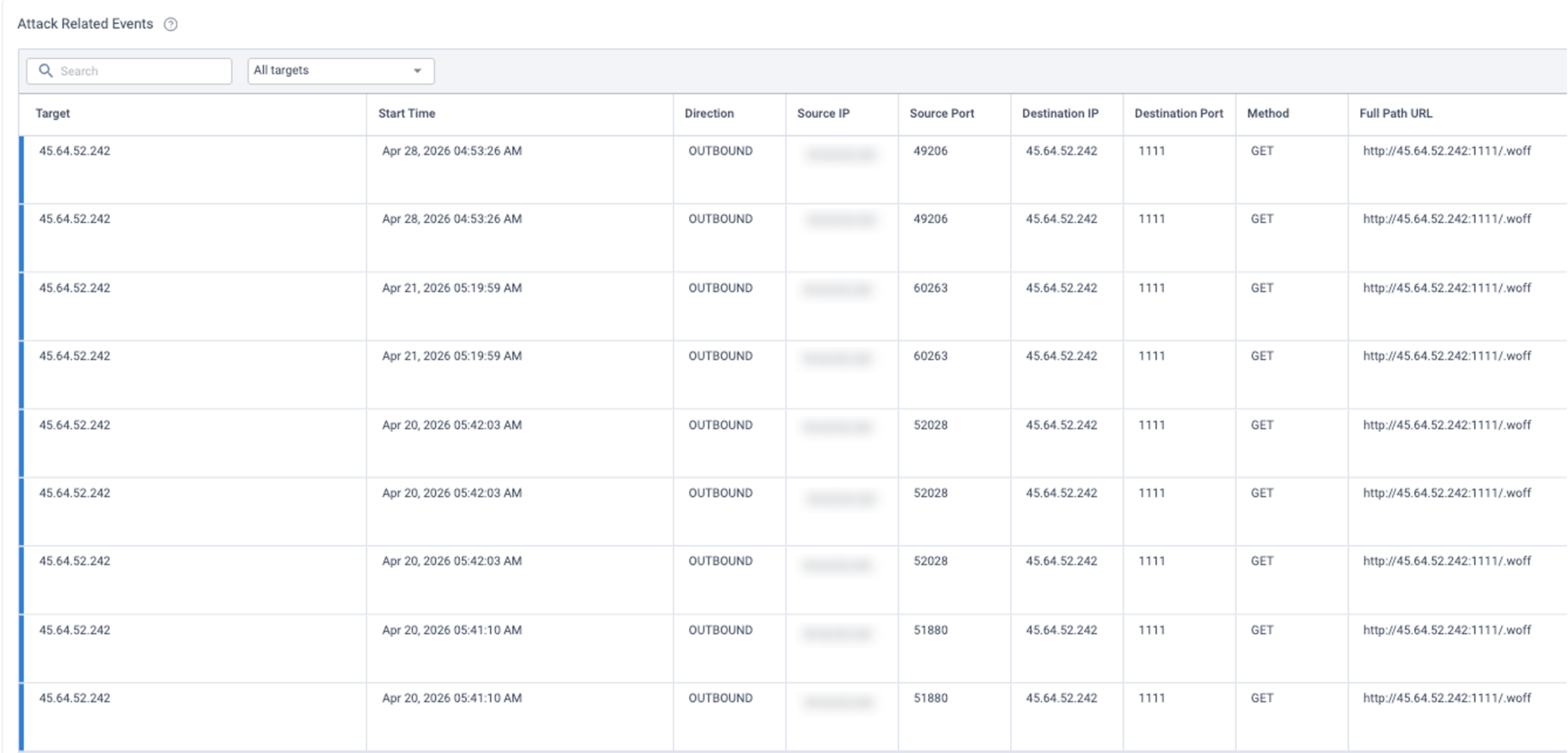
Figure 15. XOps related events showing repeated outbound requests
Relevant protections included:
- Blocking attacker-controlled URLs and destinations
- Detecting suspicious payload staging
- Providing visibility into parts of the attack chain through XOps
- Supporting MDR-led investigation and response
Conclusion
Attackers no longer need custom malware development pipelines to conduct sophisticated intrusions. Adaptable open-source tooling is often enough.
In this case, TencShell appears to have been customized from Rshell into a practical post-exploitation implant with web-like C2 communication, payload masquerading, in-memory execution, and pivoting capabilities. Rather than building a completely new malware family, the attacker adapted available offensive tooling and attempted to blend the activity into normal enterprise traffic.
We blocked the attempt before the attacker could establish durable control. This case highlights how adaptable open-source offensive frameworks can be repurposed into effective intrusion tooling in real-world enterprise environments.
Indicators of Compromise
Network Indicators
IP addresses
45[.]64[.]52[.]242
192[.]238[.]134[.]166
45[.]115[.]38[.]27
Domain:
gin-tne-fahcesmukw[.]cn-hangzhou[.]fcapp[.]run
Hashes
c3ecb90c9915daa23aec51f93ff8665778866f0592b2413578c8ba9708df6091
660af53acdc505f333f6d4f4269cec740a5eb05e41a4c7926742606b18f22d33
37facbbd0047c19f4efdea75ccb9e3ec793cb9b1d7846afa4fb8e900d6e9ed95
01dc3e7e673b4f2682f29b19ecabf9a6ec9c3042c9b1cfb39dbdddf1dda680ab
750a707084839fe970266964957b8eaa7e25b4d9ca1050cd7ab19e4a2add707d
12f76f48727916d6c05f53f8cd94915db5de5ffcbfa02c4807c27e090cfa47c1
4ae8de40153c66455d972e6e98fe06fb68db7301ba126557e96599527bc5509c
1ba73df60e12b3feb8b5574e65cfceb6910460ab7fae2cf5554769fafdad049e
5eff99959683480d2280c931e433af836adf6a8b7a8489b1af17cddcf480cf63
0fe91200a2bb4aed13b1a1ba4ec8fd4454566f5929ffed4f537d9a87c1bf1187
7f6bec5dd217151fcd03087a6e7ba1070f0fa603801fb128a4097076c9976d36
ed6058f0b0735ba56b781dea39353625fcb56bc3e77bf2d26a648511d754d216
710539554f065fe9a0bf6a6e32d3ea73ab3c797a033f8bfef57ad929bcdf9195
79340e589a69f5dc204d4073341a07e98a588d0401d18f34991d14b71a475063
8363ff6bddfaf247318308f215ad53f3c77f218d4a6562b537aeaf7e9135d10f
df5f74e1e0e5b0a0748de2efd86358293b4d368d171a926af6f14880d55adb57
b7a5192a90c14a9a36e5a3565fed46becffa88dbc719e8ee396a0c9d46f5dde4
b77c8531ee45ffdfd63ef19aa1f1ae8b603b274f6951f7d8f4e725130bfca06d
6de4da7919185f84212d02011e955530011b08c389408f2a012b81757c3d0c0f
31635e4667eba1ba3588e1bc9c05d18a78d9693c801e5176e6cddf74e0d5bcc2
d252aeabbf4cd9f336e83d1fa0042fcc2f74f45d4b8cbe2a8bfe790d4db0580d
7170f3051cc9f4520e84f1ea3b599616d82be8e5087f19d8e2951fa6848924b3
aaf49281b2f65390adc2e763af37fc4e3fe03b94af550927fc91141e0d6347db
1d2e37b41d616ecb32b8bd2f2a52c792f1808fdc938574fc366d737b6f643c61
7abc129482ccdf787b35b92b7d5b7ff2478e72fe516f4ceca0c02e23a1d34314
147f86854690ba096f3797c623b66365d6adbf7140d7d7c3dcf746b83a4b6dac
943f952652fbc16923c0519449feeee11698304dac51268d4e6065146dcad69e
73c24bafba21f871cc9d28de92ee7e4b9f9c8ec337279c14c1facdb9feeb7af4
905ae6ac24225db221da346a1695e443ba4c57ea1c9066e8bac3e5fcb4156fc7
5c02115b3f090551393cca3ce91fe837727d1c4586164c580759eb94387dba10
12c6d0e603386b81751d95b32d1698d794c99343abb06d066b0f6060e8690aca
1329be66458962dabfa20185c230439c57d32b90a20de791afdce9c15226fccb
2a010bd1061e11da6f5cf951a3ebd23503916e159e3d486cc722b4b8b4a099c9
746c4cd5fe3a8edd37d4b37b23af64b1086b5ea7c1ab0bcfd9c47e4e2e986518
5ef76098be5ed1559b71ebd8d29cb32c1825991824051d8a641746e08bf9e1b3
5ac484ec0846fff8f099b234dfd1602864300da8c68b01822c6036eb709fc584
976f890ab0ee8aac613da2458d0069f00d0ebabc76f1fceb63e05b2113f6a449
065f5a605ac04d5f443089b65aa1393414ee38c4ee8f780e7d78c06b46504ae4
cdb9d76093d0938f30d93bcce4f58b13b4b21c9188eea387c6d9ec6f4cb4aad4
b5e0866368873b4c5eacc6df01114fc749cc32f507e9324bc6d763999371777d
75b36769f0d36c05be74d41610d4af3f73397983ba746f8c569de6f23ee130e0
64944d2a6129631ff675c6dcfdd57a7e99a1e4dc41802cbd0eabcef3eb3e81c3
921e41190fed3437ca7a0d53e7590ccb0f1ab5d667532778fbda5664c657d712
5d19c07e3fb7ac4ff56a23f6e658d691f381442b1db2f8c5f345563c1cdc8998
3ffe3a6f328a6459624bd93edd206e2256b2753e17137cbc1530b91fa325ecac
2012ff4d7c36e42d256d78c265f242d29a305af66686866c581ee96c2b05d5a6
fdb5eca8f00e1802f3c9c0ca79f93a8419353f4ef2a0606bec39c4497da91035
065c54893e4777d52be6b7bf30b832d5ffd9d96fd178642a5828a364c0e904a0
8f5f4408998bbfc6987d9cb39216071c57c7b087f2867a504e83414ee5cfcd08
06776635e386d536b1b0fc21e6aa41865d44d83dae5e9b109868d71ca309eeaa
94f67819c0f7e200abf4b39fad2fd6fef227da15d939f21a657d1717ca2b3014
MITRE ATT&CK Mapping


Related Articles
The Shadow AI reality: Inside Cato’s survey results

Mitigating Credential Phishing in the Age of AI and Cloud Convergence


Securing the AI Browser Revolution: How Cato Helps Mitigate Risks in OpenAI Atlas


