
Cloud Datacenter Integration
Integrate cloud datacenters securely and cost-effectively.
Rethink optimization, security, and monitoring without sacrificing flexibility with Cato’s unified platform.
Today’s Challenges
Cloud connectivity is the hard part.
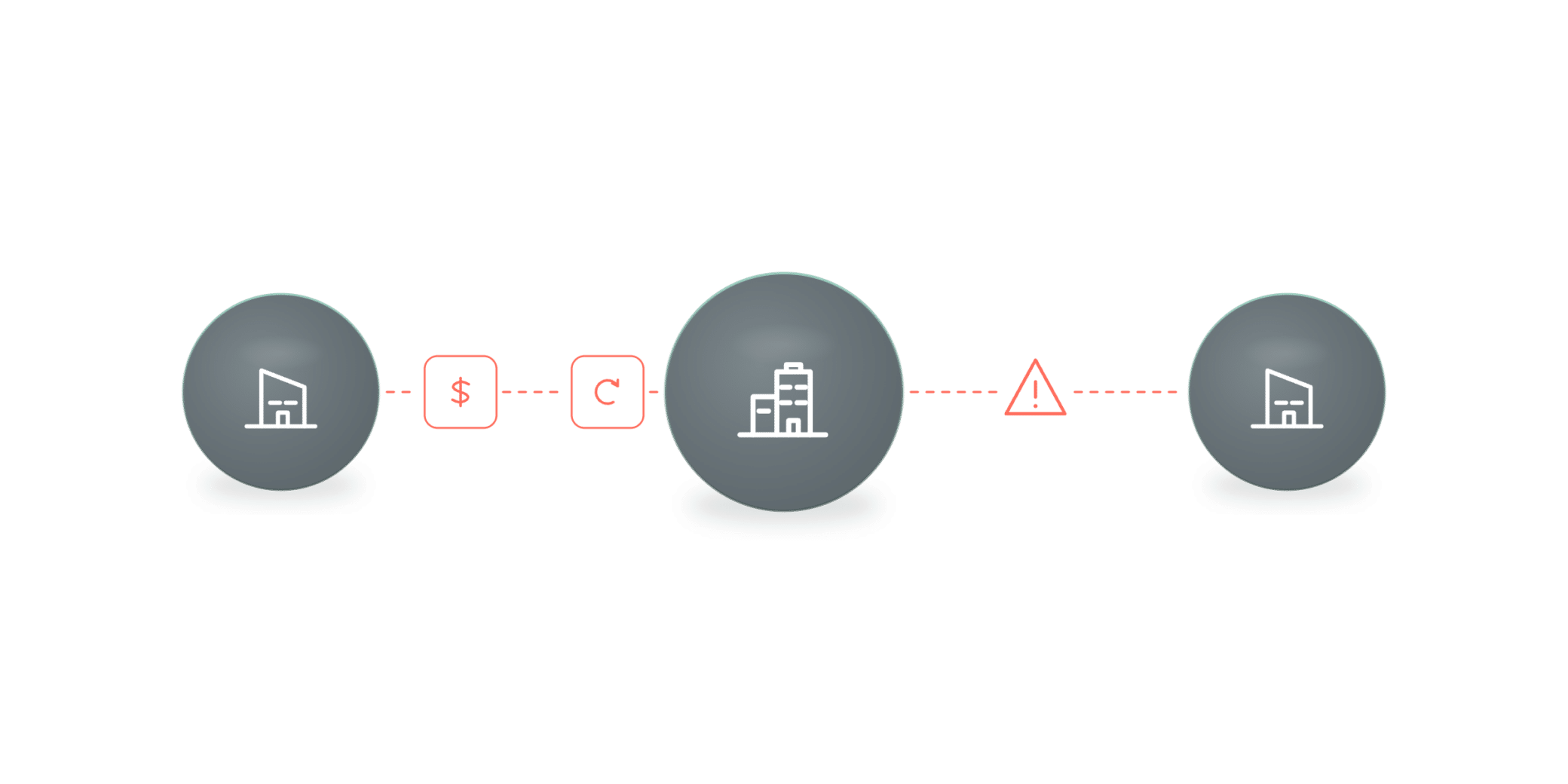


Costly cloud connectivity
Private connections to cloud datacenters are expensive, and backhauling traffic for inspection hurts performance.
Costly links
Weak ACLs
Bolted-on
Fragmented
Our approach
Make the cloud
part of your network.
Cloud datacenters offer cost savings and scalability, but connecting the WAN securely while preserving those benefits requires rethinking optimization, security, and monitoring. Cato simplifies cloud datacenter integration—enabling enterprises to discover all apps, assess risk, and enforce least-privilege access in one platform.


Connect natively
Make each cloud datacenter a native part of the Cato-connected enterprise network.

Optimize the route
Use co-located PoPs and end-to-end route optimization to eliminate latency and packet loss.

Secure and see everything
Apply one built-in security stack and manage it all from a single pane of glass.
How it works
Cloud Datacenter Integration Capabilities
Avoid high costs
Performance without the premium price tag
Cato’s global private backbone delivers end-to-end route optimization, avoiding costly private connections and backhaul.
PoPs co-located with AWS, Azure, and others
Latency and packet loss virtually eliminated
Throughput improvements of 4x to 40x
Customer Stories
Customers love Cato
“
Using Cato, we were able to bring our Spanish site closer to the servers by installing an additional socket at the Spanish site, which takes advantage of the PoP in Spain. As a result, our data center on Azure Spain is automatically accessed through the Spanish PoP, and it’s as if they’re practically on the same LAN. We have a latency of two milliseconds from our headquarters to Azure Spain—it’s just like having our servers installed locally.
Networking and Infrastructure Manager
Midsize Aerospace Supply Chain Integrator

Director, Corporate IT
Midsize Specialty Services Company

Lead Network Engineer
Large Religious Nonprofit
Get a live demo
Secure every interaction across the enterprise, cloud, and AI with the only purpose-built SASE platform.
What to expect

15–30 minute session with a SASE product expert

Discuss your use cases and how we can help

Live product demonstration where applicable
Get Started
See Cato in Action
FAQS
Answers to common questions
How does Cato connect and optimize cloud datacenter traffic?4 questions
What is Cato Cloud Datacenter Integration?
Cato Cloud Datacenter Integration connects cloud environments such as AWS and Azure into the Cato-connected enterprise network. Instead of treating each cloud datacenter as a separate networking and security project, teams can bring cloud resources into the same operating model used for sites, users, and applications.
What problems does Cato solve for cloud datacenter connectivity?
Cloud datacenters can be difficult to connect without adding cost, latency, or operational sprawl. Cato addresses common issues such as costly private cloud connectivity, inconsistent access controls, separate virtual firewall deployments, and fragmented visibility across cloud resources, sites, and mobile users.
How does Cato improve performance when connecting to cloud datacenters?
Cato uses Cato Neural Edge, its global private backbone, and PoPs located near major cloud regions to optimize routes between users, sites, and cloud datacenters. This approach can reduce latency, packet loss, and dependence on unpredictable public-internet routes.
How is this different from backhauling cloud traffic for inspection?
Backhauling cloud traffic to a central security appliance can add delay and reduce the performance benefits of moving workloads to the cloud. With Cato, traffic can be carried over Cato Neural Edge and inspected through Cato’s cloud-delivered security stack, reducing the need for distant inspection points.
How does Cato secure and control cloud datacenters?2 questions
How does Cato handle security for cloud datacenters?
Cato’s cloud-delivered security is built into the Cato SASE Cloud, so teams can reduce separate physical or virtual firewall deployments for each cloud datacenter. Traffic can be processed through one security stack as cloud environments are added or expanded.
How does Cato improve access control for cloud resources?
Once cloud networks are connected, Cato can apply identity-aware network security policies to cloud traffic. This gives teams consistent user and application controls alongside cloud-native access controls, without adding separate third-party virtual firewalls for every cloud datacenter.
How does Cato simplify hybrid-cloud operations?2 questions
Can cloud datacenters, branch offices, and mobile users be managed together?
Yes. Cato makes cloud datacenters part of the same connected network view as physical sites and mobile users. Network and security policies can be managed from one console, with analytics and security event reporting across the environment.
Who is Cato Cloud Datacenter Integration designed for?
It is designed for organizations that use cloud datacenters as part of their production environment and need secure, efficient connectivity without building a separate stack around every cloud location. It is especially relevant for teams trying to reduce dedicated connectivity costs, avoid appliance sprawl, and improve visibility across hybrid infrastructure.


