The Agentic AI Security Adoption Matrix: Autonomy Scales Where Control Exists


Table of Contents
- 1. The Agentic AI Security Adoption Matrix
- 2. Agentic changes the threat model
- 3. Why adoption splits by domain
- 4. The matrix: adoption readiness vs security sensitivity
- 5. Controls come before scale
- 6. What accelerates adoption in the slow domains
- 7. Governance is not the blocker. It is the scaling mechanism
- 8. Domain readiness and framework alignment
- 9. What we can learn from the matrix
- 10. The winners will be the teams who can prove safety
|
Listen to post:
🔊 This audio player requires that "Preferences" cookies be accepted
|
Agentic AI is crossing a threshold. It is no longer just generating content or answering questions. It is beginning to plan, decide, and execute actions across tools, systems, and workflows.
That shift unlocks real efficiency, but it also changes the security equation. When an AI system can act, it becomes part of your operational attack surface. It can be influenced, misdirected, or exploited. It can make mistakes at machine speed. And if it has permissions, it can create real impact. Agentic AI adoption is not moving as a single wave. In practice, it splits by domain. Some environments are accelerating quickly, while others are delaying mainstream deployment because the risk is higher and oversight requirements are stricter.
The Agentic AI Security Adoption Matrix
The adoption divide becomes much easier to see when it is mapped against two forces that security and governance teams care about most: how ready a domain is to operationalize agentic workflows, and how sensitive it is to failure, abuse, and regulatory exposure. Figure 1 captures that intersection in the Agentic AI Security Adoption Matrix (security risk and governance sensitivity in adoption of Agentic AI across domains), showing why some domains scale autonomy quickly while others progress through constrained pilots. The core lesson is that autonomy scales where assurance is measurable: where actions can be constrained, monitored, and traced to clear accountability.
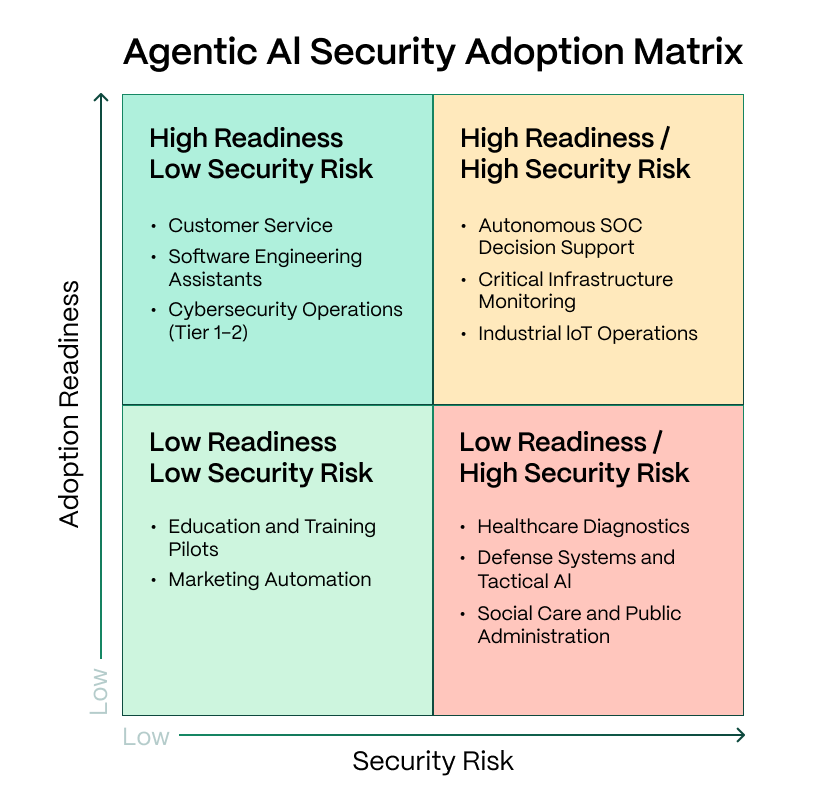
Figure 1. The Agentic AI Adoption Matrix
Agentic changes the threat model
Traditional automation runs deterministic workflows. Agentic AI introduces goal pursuit, dynamic reasoning, and tool use. That makes it powerful, but also vulnerable in new ways.
Security teams should assume at least these categories of risk appear as autonomy increases:
1. Manipulation risk
Agents can be steered by malicious or polluted inputs, including prompt injection patterns that redirect intent, override instructions, or induce unsafe tool usage. The key point is not the prompt itself. The key point is the agent’s coupling to tools and permissions.
2. Permission amplification
An agent with access to internal systems can turn a small influence into a large outcome. This is the autonomy equivalent of privilege escalation. Even without “hacking,” a system can be induced into doing something it is allowed to do, but should not do in that context.
3. Accountability gaps
If you cannot explain why an action happened, you cannot defend it, audit it, or learn from it. In high-liability domains, explainability is not a nice-to-have. It becomes part of legal and operational safety.
4. Operational blast radius
Agentic workflows can chain actions. That can turn a single error into a cascade. In low-risk contexts you can absorb that and roll back. In safety-critical contexts, rollback may not exist.
So the question is not “Can the model do it?” The question is “Can we prove it can do it safely, repeatedly, under real-world conditions, including adversarial pressure?”
Why adoption splits by domain
The research synthesis shows a clear bifurcation:
- Fast adoption in digitally bounded enterprise environments where autonomy can be constrained and oversight is straightforward
- Cautious adoption in high-risk socio-technical sectors where compliance, liability, and ethical governance require stronger guarantees
In customer service or software workflows, you can sandbox tools, restrict outputs, log everything, and correct mistakes. In healthcare and defense, the consequences of a wrong action are higher, the acceptable failure rate is lower, and the requirements for traceability and human oversight are much stronger.
This is why the “overnight rollout” narrative fails. Agentic AI will not arrive everywhere at the same time.
The matrix: adoption readiness vs security sensitivity
The matrix maps a simple interaction:
- Adoption readiness (maturity)
How prepared the domain is to integrate agentic workflows, including automation culture, integration patterns, and operational processes. - Security sensitivity and governance intensity
How costly failure is, including regulatory exposure, operational criticality, liability, ethics, and adversarial attractiveness.
Plotting domains across these dimensions reveals why some sectors move quickly and others move slowly.
High readiness, lower friction: where agentic AI scales first
These domains typically allow bounded autonomy and rapid iteration:
- Customer service and digital operations
- Software engineering assistance
- Cybersecurity operations centers
They benefit from autonomy because the action space can be constrained and the impact can be measured. Security controls can be applied in a structured way, such as least privilege tool access, gated execution, and robust observability.
High sensitivity: where mainstream deployment slows down
These domains are explicitly treated as high-risk in major governance frameworks, and that matters:
- Healthcare
- Defense
- Social care
Here, pilots are common, but broad deployment is slower due to requirements around explainability, human-in-the-loop controls, liability boundaries, and formal assurance.
Controls come before scale
What looks like slow progress is often simply an assurance gap.
High-sensitivity domains are not waiting for better demos. They are waiting for proof:
- proof of bounded autonomy
- proof of enforceable policy
- proof of monitoring and audit trails
- proof of resilience against manipulation
- proof of human oversight at the right moments
This is also why some domains will take longer than people expect. The limiting factor is the surrounding system of controls, not the core model.
What accelerates adoption in the slow domains
Two forces can make high-sensitivity adoption move faster, without compromising safety.
1. Regulation that reduces uncertainty
Regulation is often framed as friction, but it can also be an accelerator. Clear rules convert hesitation into a checklist.
Builders know what to implement. Buyers know what to demand. Auditors know what to verify.
Frameworks and standards such as NIST AI RMF, NIST CSF 2.0, the EU AI Act, and ISO AI standards formalize expectations around oversight, risk management, and governance.
2. Security offerings tested in practice
High-risk domains need more than principles. They need operational patterns that work under real constraints:
- tool access control that is actually enforceable
- strong identity and authorization boundaries
- runtime monitoring with anomaly detection
- policy-controlled orchestration
- auditability across decisions and actions
This is where architectures built around supervision and control layers become essential, because they turn agentic AI into a governable system, not a black box.
Governance is not the blocker. It is the scaling mechanism
Autonomy is acceptable only when controls are layered and enforceable. Otherwise autonomy becomes an incident waiting to happen.
Across the governance frameworks and enterprise practices reviewed, one pattern shows up repeatedly: trustworthy agentic AI is built on layered controls, not a single safeguard. These layers typically span policy, organizational oversight, technical guardrails, operational procedures, and the underlying infrastructure that enforces them. Figure 2 summarizes this as the Layered Governance Model, illustrating how each layer anchors assurance and accountability as autonomy increases.
Domain readiness and framework alignment
Table 1 highlights why agentic AI scales faster in digitally bounded environments and remains constrained in high-liability sectors, where assurance requirements and oversight are stricter.
Table 1. Domain-Wise Summary of Agentic AI Adoption Readiness
Source: Aggregated results from coded dataset [1]–[51].
Table 2 shows how governance intent translates into implementation expectations by connecting frameworks to domain contexts, clarifying why “high-risk” classifications often imply human oversight, documentation, and control-layer requirements.
Table 2. Aggregate Domain Readiness and Security Sensitivity
Source: Aggregated results from coded dataset [1]–[51].
What we can learn from the matrix
The matrix highlights a consistent pattern across domains: agentic AI scales fastest where autonomy can be bounded and outcomes are auditable, and it slows down where liability, safety impact, and governance requirements are higher.
One clear takeaway is that domains tend to diverge based on how “recoverable” failure is. In digitally bounded environments, failures are often reversible and investigation is relatively straightforward. In safety-critical contexts, failures can carry high-liability consequences, and oversight requirements rise sharply. That difference alone reshapes how quickly autonomy can expand.
A second takeaway is that autonomy rarely arrives as a single leap. The evidence points to a staged progression that appears repeatedly across implementations:
- Assistive behaviors that recommend or prioritize actions
- Supervised execution where actions are taken only with explicit approval
- Bounded autonomy within constrained workflows and permissions
- Autonomy with escalation on uncertainty where the system defers when confidence drops or impact becomes irreversible
Finally, the matrix makes visible what tends to correlate with faster adoption without compromising trust: the presence of a control plane that can bound and observe agent behavior. In practice, this usually means:
- least privilege tool access
- strong identity boundaries
- enforceable policy controls
- audit-grade observability and traceability
- adversarial testing and red teaming
- explicit human oversight at defined decision points
When these elements are present and proven, organizations appear more willing to expand autonomy. When they are weak, unclear, or untested, deployments tend to remain constrained by design, often limited to pilots or narrow workflows.
The winners will be the teams who can prove safety
Agentic AI is real and it is already delivering value in domains where autonomy can be constrained and observed.
The next phase is not about who has the smartest model. It is about who can prove trustworthy operation under governance and adversarial reality.
The adoption curve will remain uneven until more domains can answer these questions confidently:
- Can we constrain the agent’s action space?
- Can we observe and audit what it did and why it did it?
- Can we detect manipulation and unsafe tool usage?
- Can we enforce human oversight where risk demands it?
- Can we scale autonomy without scaling incidents?
That is why the matrix matters. It explains what is happening now, and it predicts what must be true for agentic AI to safely expand into the domains that matter most.
Source
This blog post is based on a research paper authored by Dr. Guy Waizel, Tech Evangelist at Cato Networks.
The paper was externally peer-reviewed, accepted in the context of the EU Smart Cities International Conference (SCIC) 2025, and published in the Smart Cities and Regional Development journal. The study is based on a review of 51 sources.
Waizel, G. (2026). The Agentic AI Security Adoption Matrix: Understanding Readiness and Resistance Across Domains. Smart Cities and Regional Development (SCRD) Journal, 10(2), 75–84. https://doi.org/10.25019/hccxvf87


Related Articles
The Hugging Face Incident: A CISO Wake-Up Call for the Agentic Era
Cato CTRL™ Insights: Governing Hermes Agent, Security for AI That Learns, Remembers, and Acts

Code Review That Learns: Inside Cato R&D’s Self-Evolving PR Review Agent