
Private App Access, Zero Network Change

|
Listen to post:
🔊 This audio player requires that "Preferences" cookies be accepted
|
As organizations advance toward Security Service Edge (SSE), secure access to private applications has become a practical priority. Executives rightly expect these programs to improve security while increasing agility. Yet many initiatives slow down at the same point: extending access to private applications. The work often depends on firewall exceptions, routing changes, and cross-team coordination, followed by tightly controlled maintenance windows. These dependencies delay deployment, increase the likelihood of misconfiguration, and invite temporary workarounds that become permanent.
Zero Trust Meets Network Reality
Most organizations do not struggle with the concept of Zero Trust. They falter on the realities of the existing network. Private applications sit behind segmented VLANs, legacy datacenters, and tightly governed zones designed to minimize change. Publishing a single app can require routing adjustments, firewall updates, and careful coordination across teams, often under strict change-control policies and limited maintenance windows. The result is a gap between the ideal, fast, app-level, least-privilege access, and what teams can deliver in practice. Projects slow, scope narrows, and exceptions accumulate. Over time, ZTNA becomes uneven: modern for some apps, but constrained for the systems that matter most. That friction sets the stage for the most common and most dangerous fallback.
The VPN Fallback Increases Risk and Complexity
When secure access is slow to deliver, organizations predictably fall back on broad network access, often through VPN or VPN-like exceptions. This approach expands the blast radius of credential compromise by granting network reachability rather than application-specific access. It also creates fragmented enforcement across multiple tools and access methods, complicating governance and making it harder to prove consistent policy application.
Reducing unnecessary access is not only a security objective. It is a business resilience objective. Incidents spread more easily when access is overbroad, and containment becomes more difficult when visibility and control are distributed across silos.
Private Apps, No Network Changes
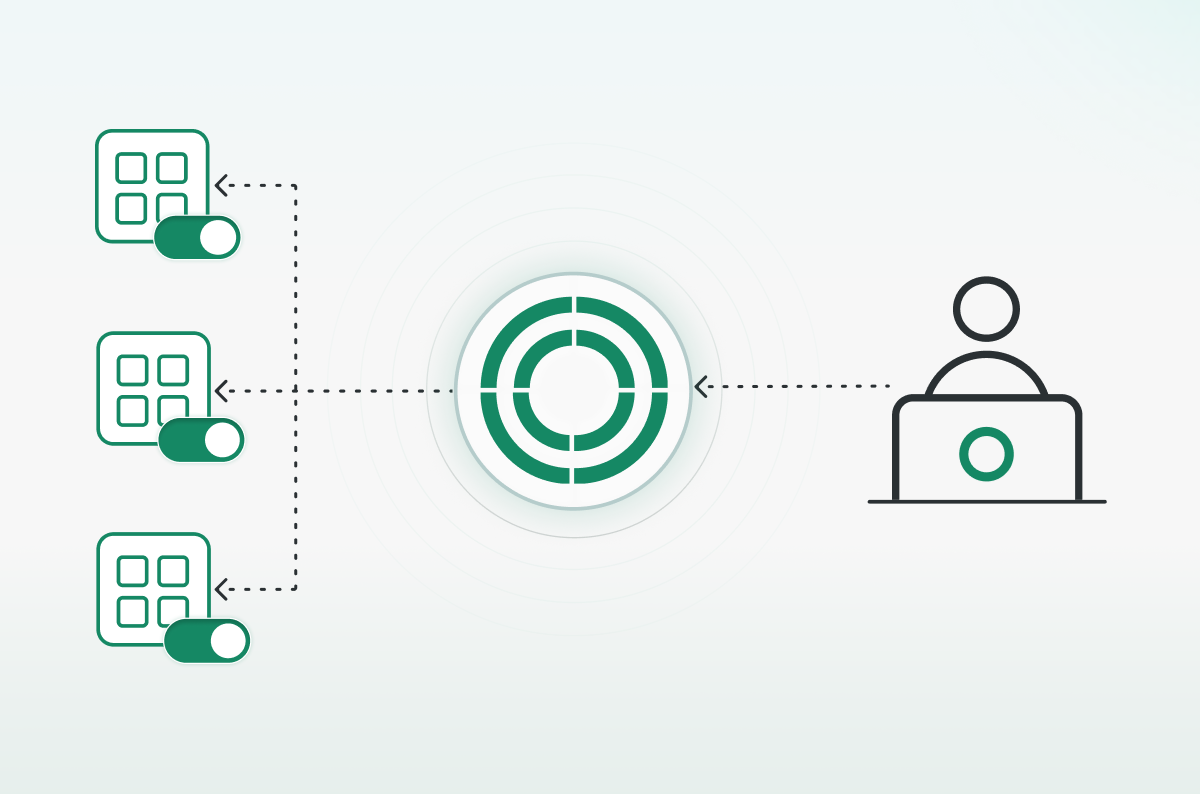
Cato Private Access, enabled by the Cato AppConnector, is built to remove the most common blocker to private application access: reliance on network changes. AppConnector is a lightweight virtual machine deployed close to private applications. It establishes secure inbound connectivity to the Cato SASE Platform so applications can be published without requiring routing or firewall changes. Once connected, access is governed through identity-based policies and managed centrally in the Cato Management Application.
This architecture also changes what “connecting an app” means operationally. Traditional approaches often proxy traffic but leave security controls and visibility fragmented. With Cato, private application access is processed through the Cato SASE Platform, enabling single-pass security inspection, integrated threat prevention, traffic optimization, and centralized policy enforcement and visibility through a single management console.
Faster Access, Lower Risk, Better Outcomes
For executive stakeholders, the benefits are best framed in outcomes rather than features.
Accelerate business access. Private Access speeds onboarding for employees, contractors, and partners by removing dependencies on routing and firewall change windows. This improves responsiveness to growth initiatives and reduces internal friction that delays delivery.
Reduce costly breach exposure. Publishing applications with application-level controls, rather than extending network reach, reduces cyber risk. Private applications are also removed from direct internet exposure, lowering the likelihood of disruptive events and the operational impact of compromised credentials.
Lower operational overhead. Eliminating routing and firewall changes simplifies change management and lowers the risk of outages and misconfigurations. Centralized policy and unified visibility reduce ongoing administrative effort and improve auditability.
These outcomes are particularly relevant in environments with strict change control, in third-party access scenarios where scope must be tightly limited, and in M&A situations where day-1 access is required even when network integration is incomplete or complicated by IP overlap and unclear ownership.
Cato Private Access extends Zero Trust access to private applications, using the same architecture as for internet and SaaS access. It is enabled through bandwidth licensing, scales without per-application licensing complexity, and preserves a strict Zero Trust posture by providing application-level access only, not general network connectivity.
For leaders who have committed to Zero Trust but are constrained by network change cycles, the path forward is to remove the dependency rather than accept exceptions. Start with one high-impact private application, demonstrate faster onboarding with tighter access control, and then scale the application by application. For more information on Cato Private Access, visit our website.


Related Articles
Unmanaged Doesn’t Have to Mean Unprotected




Building a Resilient City: How Cato Rolls Out PoP Changes Safely