Make Your SIEM Smarter with Cato


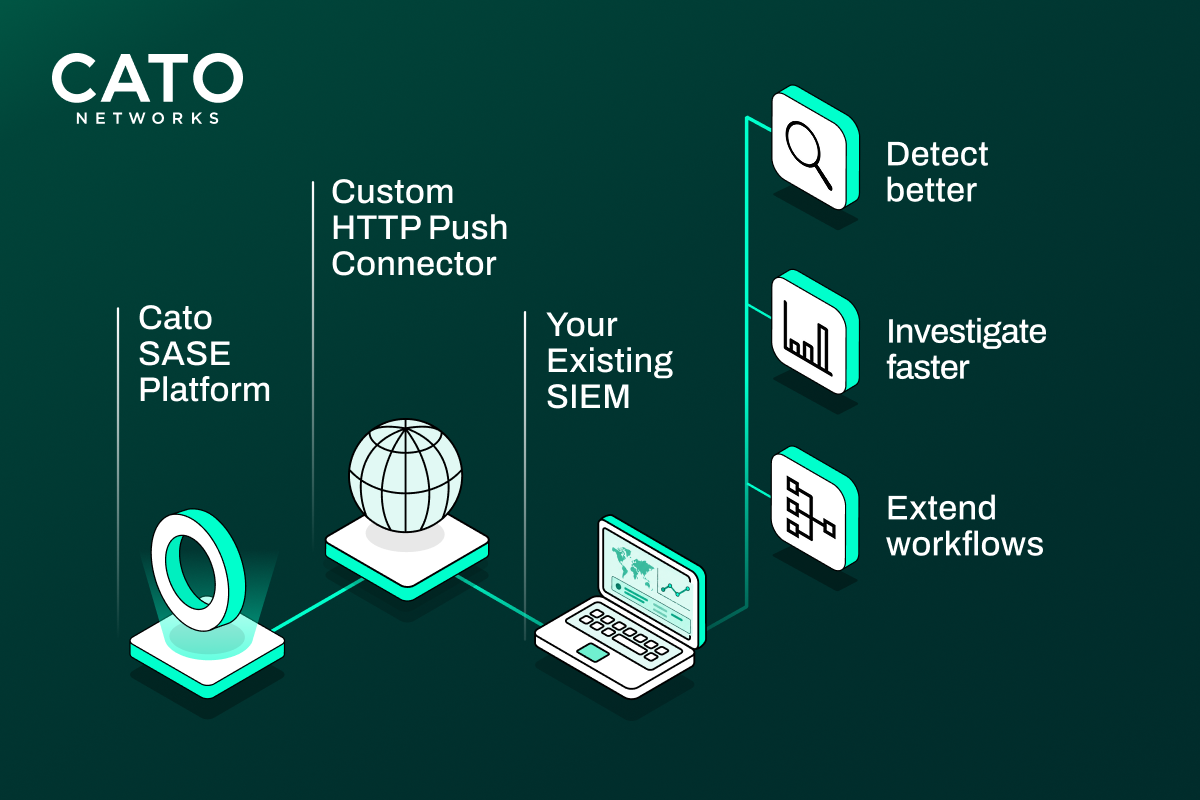
Effective security operations require more than isolated alerts. Analysts need context from across the environment to understand what happened, assess its significance, and decide what to do next. That is why accessing insights and telemetry from across your networking and security stack is critical to teams using a SIEM tool. That wider context from endpoints, identity, cloud, applications, network infrastructure, and threat intelligence, brought into a common operational workflow, adds essential intelligence. With more complete information available where analysts already work, they can investigate faster and make better-informed decisions.
Cato XOps brings network and security context from across the Cato SASE Platform into a shared operational view to accelerate incident detection, investigation, and response. Organizations can use that context in the operating model that works best for them, by enriching their existing SIEM workflows with the Custom HTTP Push Connector, or by bringing network and security operations closer together with Cato XOps.
Add Cato Context to SIEM Workflows
Most security operations teams have invested heavily in their SIEM: detection rules, investigation processes, automation, and the expertise to use them well. However, legacy approaches too often rely on scheduled collection or polling for updated data. Network outages and cyber threats demand real-time responses, making timely insights critical. Adding Cato telemetry strengthens the existing operating model, without creating another place to work. Cato context can be analyzed alongside endpoint, identity, cloud, and other telemetry they already available in the SIEM. When suspicious activity appears, analysts can investigate with Cato data in the same investigation workflow, reducing time spent moving between tools and providing more context to access scope and potential impact.
Send the data that each destination needs
Different destinations require different Cato data.
A SIEM used for security investigation may need a different set of Cato data than a platform used for network analytics or long-term analysis. Organizations can align the data sent to each destination with how it will be used. Full control over the source, destination, filters and context. There’s even a data dictionary to demystify endless fields of information, translating them to help find what matters.
Control Ingestion and Retention
Filtering data before it is sent helps keep relevant telemetry available to analysts while reducing unnecessary SIEM ingestion. It also supports destinations such as long-term storage and custom analytics.
Use Case: See More Context. Detect and Investigate Faster.
Consider an analyst investigating suspicious user activity in an existing SIEM. The SIEM may already correlate signals from identity and endpoint tools, but analysts often need additional network and security context to understand what happened and assess the potential impact.
When the SIEM flags suspicious activity, analysts can use Cato telemetry alongside existing identity and endpoint data without switching workflows.
That approach supports several parts of security operations.
- Investigate with more context. Add relevant Cato network and security telemetry to the data already used for detection and correlation in the SIEM, reducing the need for separate tools. Less noise, more insights.
- Leverage network data to stop attacks quicker. Up to 70% of breaches use lateral movement, so by including network insights alongside security event data, IT teams understand the complete attack path, and can respond and remediate faster.
- Extend existing workflows. Feed Cato data into existing threat hunting, analytics, and automation processes instead of creating parallel processes around another data source.
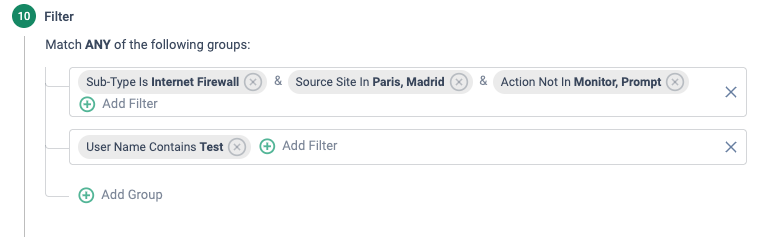
Configure filters before sending to SIEM.
Use Case: Consolidate your responses with Cato XOps
For organizations without a SIEM, or who are looking to bring their network and security teams together for even faster, more efficient operations, Cato XOps supercharges incident response.
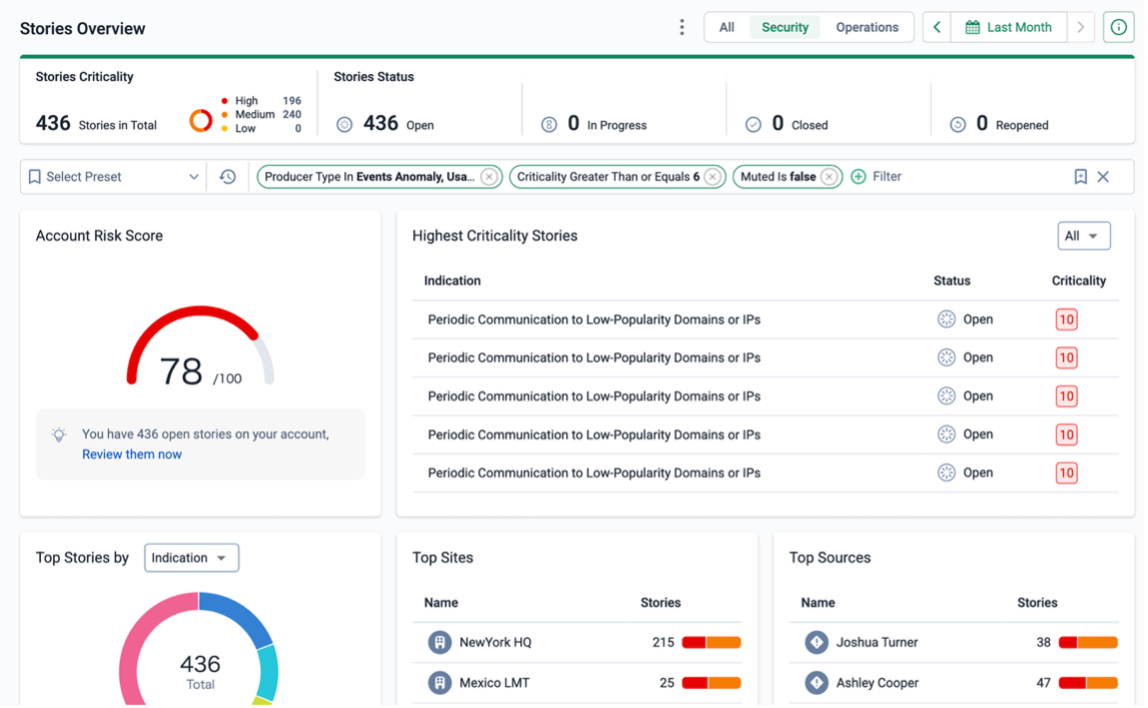
That context extends beyond traditional north-south security visibility. The majority of data breaches involve lateral movement across the network. Because Cato also sees east-west traffic across the WAN, analysts can gain signals associated with activity moving between enterprise resources, adding network context that security-focused data sources alone may not provide. The majority of Cato XOps also brings unique benefits around more efficient data storage in SIEM solutions. Cato XOps correlates thousands of raw events into consolidated, context rich stories, simplifying what is passed to the SIEM. Where SIEM costs are calculated based on data ingestion volumes, that can help deliver significant savings. One Cato customer turned 37 million daily event logs into just 94 stories.
Use Case: Analytics that’s build around your needs
Every organization has different workflows and environments, and data requirements. The Cato Custom HTTP Push Connector lets organizations define the destination, select Events and Flows, apply filters, and start streaming data.
Alongside the native integrations from Cato , the Connector extends data portability to even more sources. That can also include long term retention, such as in AWS S3, or custom analysis.
Native integrations, bespoke connections or leveraging XOps for the insights and response layer – Cato gives security and network teams flexible ways to provide the right context where it delivers the most value. Native integrations are available for over 100 vendors including CrowdStrike, Microsoft and Open AI, while the Custom HTTP Push Connector streams selected Events and Flows to compatible destinations. Combined with Cato XOps, these capabilities can enrich investigations, manage SIEM ingestion, and extend network and security intelligence across existing operations.
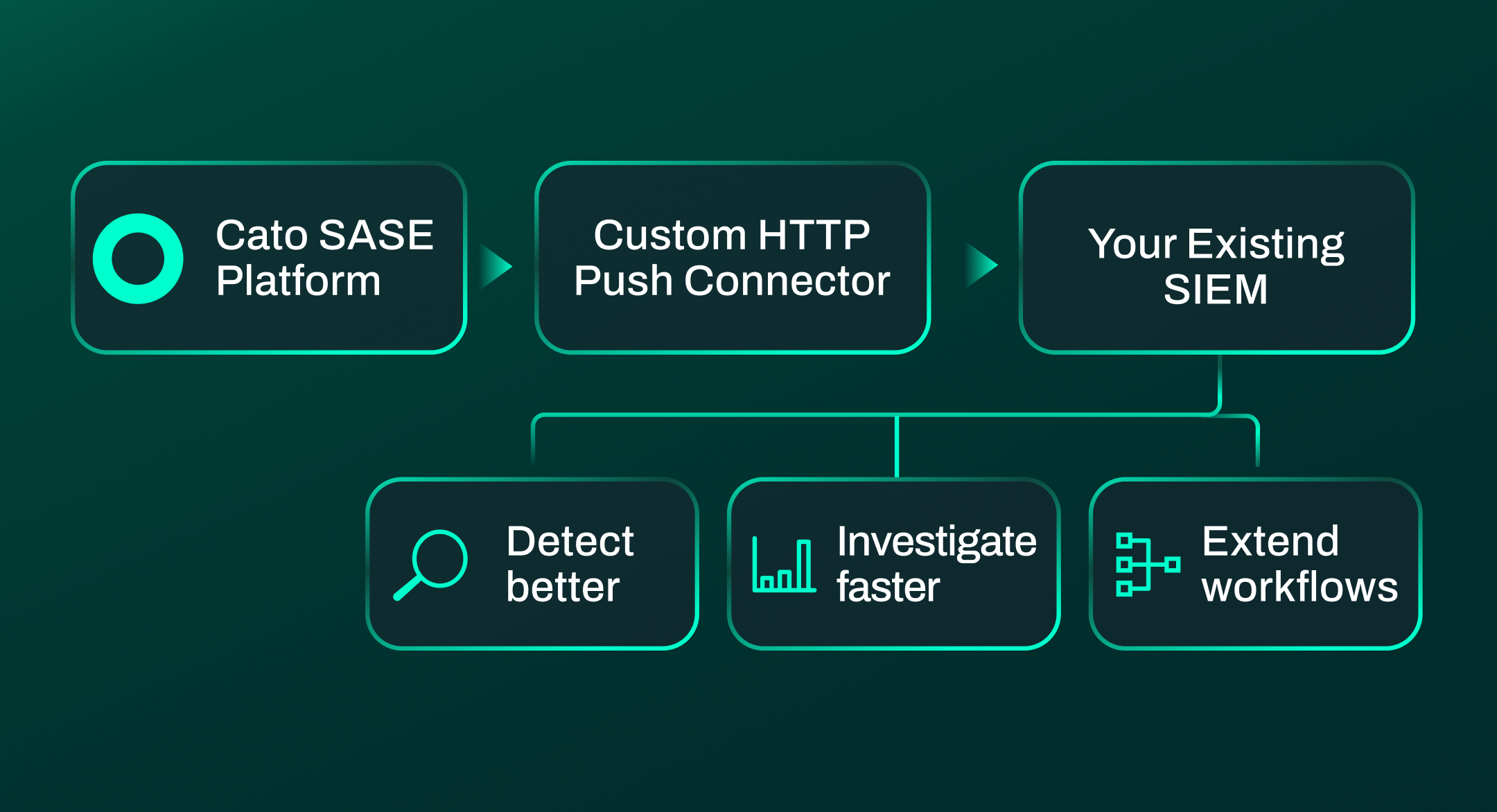
For detailed instructions on configuring the Custom HTTP Push Connector, visit the Cato Knowledge Base.
Visit our Cato XOps page to learn more about it.


Related Articles
Eliminating Enterprise Browser Complexity in the Age of Universal ZTNA


The Evolution of Cato SASE: Welcome to the New Platform Economy