The Future of Agentic Defense is Contextual


|
Listen to post:
🔊 This audio player requires that "Preferences" cookies be accepted
|
Defensive asymmetry. The visibility gap. The defender’s dilemma. These terms describe a significant challenge: attackers often succeed because they uncover information defenders either don’t know about or can’t act on quickly enough.
Every successful breach starts with information. Attackers map assets, identities, vulnerabilities, and potential attack paths before they ever launch an exploit. That understanding becomes their biggest advantage, yet defenders already possess far deeper and more authoritative information about their own environments. They can see users, devices, applications, network traffic, security events, and policies from inside the organization. The problem is that this information is fragmented across disconnected tools that can’t quickly combine it into actionable insights. Security teams have plenty of data; the gap is a lack of shared context, and it’s becoming a gold mine for agentic attackers.
Shared context changes the balance of power
Unlike disconnected point solutions, Cato’s unified inspection engine evaluates every connection using shared context collected across the enterprise.
- User and identity context
- Device, application, and asset context
- Network behavior
- Security events and vulnerabilities
- Data activity and threat intelligence
These signals become far more valuable when evaluated together. Activity that appears harmless in isolation may reveal an attack path when viewed alongside identity, application, vulnerability, and network context.
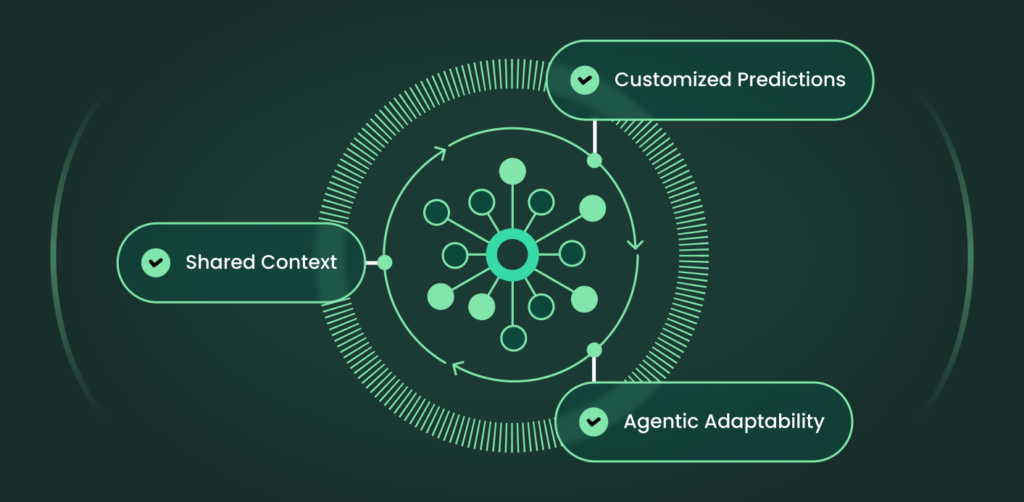
This shared context is the fundamental advantage of Cato’s Agentic Threat Prevention, which was developed to turn the agentic attacker’s capabilities into a defensive advantage. Like any AI agent, its effectiveness depends on the quality and completeness of the information it receives. Because Cato provides a unified view of users, applications, devices, events, and network activity, Agentic Threat Prevention can move from identifying attacks to predicting them.
Context improves prediction
Cato Agentic Threat Prevention uses shared context to build a detailed understanding of each organization’s environment and continuously evaluates suspicious activity and correlates isolated events.
As shown in the demo video for example, a host downloading PsTools could easily be a benign event. But with shared context, Agentic Threat Prevention knows that this host is a user from the finance department, downloading the tools for the first time, after hours, and from a suspicious domain. The defending agent predicts tool execution, and potential lateral movement. With a deep understanding of the attack surface, the defensive agent can identify how an attacker is likely to progress through a given environment.
Can Your Security Architecture Prevent Attacks at AI Speed? | Download the eBookThe deeper the organizational context, the more accurately the defending agent can identify likely attack paths and recommend protections that fit the organization’s unique attack surface. This is what enables customer-specific predictions instead of generic threat detection.
Prediction drives adaptive action
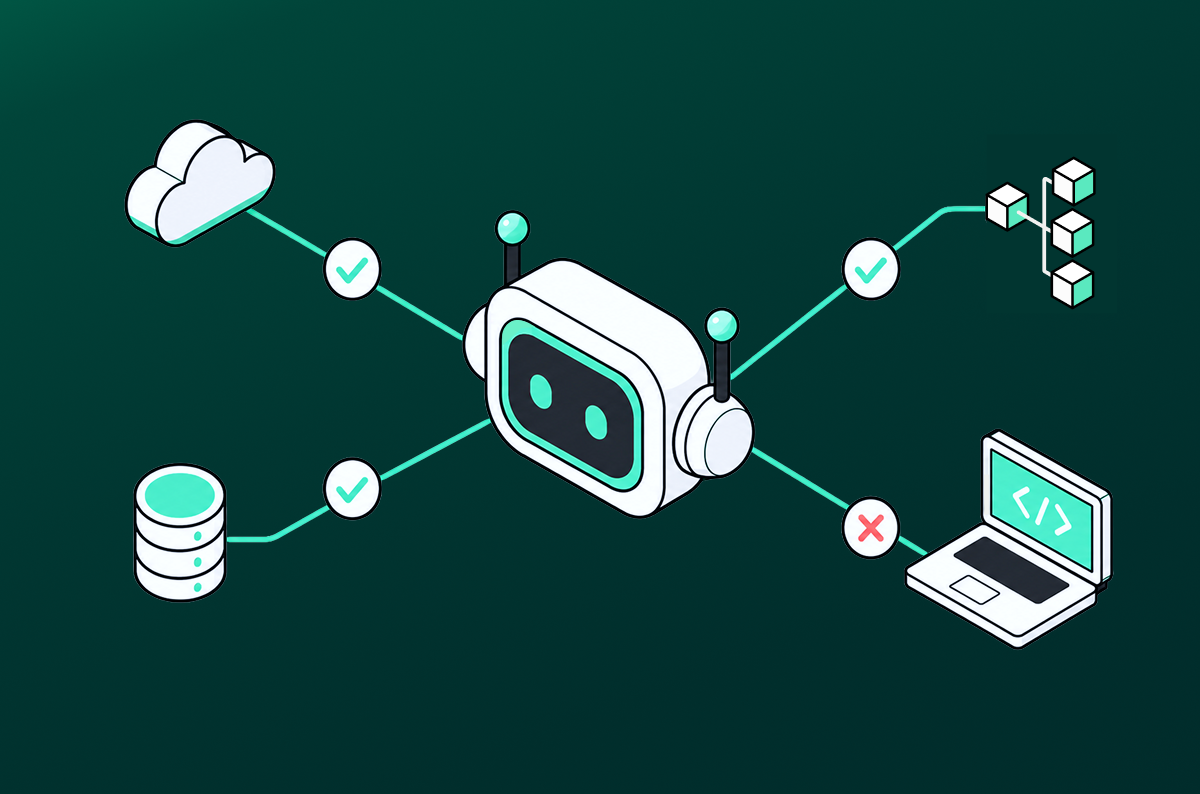
Prediction provides direction, but prevention requires action. When the previous agentic attacker pivots to install OpenClaw, shared context carries the reasoning forward. The activity is connected to the earlier suspicious PsTools download on the same host, rather than treated as an isolated event. That association predicts continued tool acquisition, so Agentic Threat Prevention blocks further skill installations, and access to other tools. Shared context is the connective tissue between what happened, what is likely to happen next, and the controls that interrupt the attack path.
Because these new controls are managed through a unified platform, those protections are enforced across the entire environment without the delays introduced by disconnected tools and manual workflows. The result is predictive, adaptive threat prevention that operates at machine speed since AI attack traffic is doing the same.
Scalability supports resilience
Recent machine speed agentic attacks demonstrate how AI can dramatically increase attack activity and the resulting volume of security events. For example, the recent Hugging Face attack generated over 17,000 events in two days1. As these agentic attack techniques become more widely available, security platforms must deeply inspect significantly more traffic without sacrificing detection accuracy or performance.
Unlike appliance-based architectures, the Cato SASE Cloud can elastically add processing resources as demand grows. This cloud-native architecture maintains inspection depth and consistent policy enforcement even during large spikes in AI-powered attack activity.
Activate the defender’s advantage
Attackers must perform reconnaissance to approximate an organization’s environment. Defenders already possess the authoritative context required to understand it.
Cato’s Agentic Threat Prevention turns that existing advantage into an actionable defense by leveraging shared context to make accurate predictions for each organization’s environment. These decisions are used to adapt policy automatically and break agentic multi-stage attack chains. As agentic attacks increase speed and scale, Cato’s cloud-native platform maintains consistent inspection and enforcement without adding operational complexity.
To learn more about how Cato Agentic Threat Prevention helps organizations stay ahead of agentic attacks, visit catonetworks.com/agentic-threat-prevention.
Source:
1 Hugging Face Security Incident Disclosure, July 2026


Related Articles