How to Gradually Deploy SASE in an Enterprise

|
Listen to post:
🔊 This audio player requires that "Preferences" cookies be accepted
|
For decades, enterprises have been stuck on complex and rigid architecture that has prevented them from achieving business agility and outdoing their competition. But now they don’t have to. SASE (Secure Access Service Edge), was recognized by Gartner in 2019 as a new category that converges enterprise networking and security point solutions into a unified, cloud-delivered service. Gartner predicts that “by 2025, at least 60% of enterprises will have explicit strategies and timelines for SASE adoption encompassing user, branch and edge access, up from 10% in 2020.”
SASE converges networking and security into a single architecture that is:
- Cloud-native
- Globally distributed
- Secure
- And covers all edges
Enterprises can deploy SASE at the flip of a switch or gradually. In this blog post, we list five different gradual deployment use cases that enterprise IT can incorporate. For more detailed explanations, you can read the in-depth ebook that this blog post is based on, “SASE as a Gradual Deployment”.
5 Questions to Ask Your SASE Provider | eBook
Use Case #1: MPLS Migration to SD-WAN
SASE can support running MPLS alongside SD-WAN. In this first use case, enterprises leverage SASE’s SD-WAN functionalities, while turning off MPLS sites at their own schedule. Existing security and remote access solutions remain in place.
Use Case #2: Optimize Global Connectivity
SASE improves performance across global sites and WAN applications. Enterprises can use SASE for global connectivity and keep MPLS connections for critical WAN applications.
Use Case #3: Secure Branch Internet Access
SASE eliminates the need for edge security devices by including new technologies instead. For example, NGFW, IPS, ZTNA, and more. In this use case, MPLS is augmented with SASE security.
Use Case #4: Cloud Acceleration and Control
SASE’s global network of PoPs (Points of Presence) optimizes traffic in the network and to cloud data centers. Enterprises can leverage SASE instead of relying on the erratic Internet.
Use Case #5: Remote Access
SASE optimizes and secures remote traffic. By replacing VPNs with SASE, enterprises can ensure remote access to all edges through a secure network of global PoPs.
Introducing Cato: The World’s First SASE Service
Cato is the world’s first SASE platform, which supports gradual migration while connecting all network resources, including branches, mobile, remote employees, data centers, and more. Through a global and secure cloud-native network, Cato also offers:
- Managed threat detection and response
- Event discovery
- Intelligent last-mile management
- Hands-free management
- So much more
To learn more about MPLS to SASE deployment, read the ebook “SASE as a Gradual Deployment”.


Related Articles
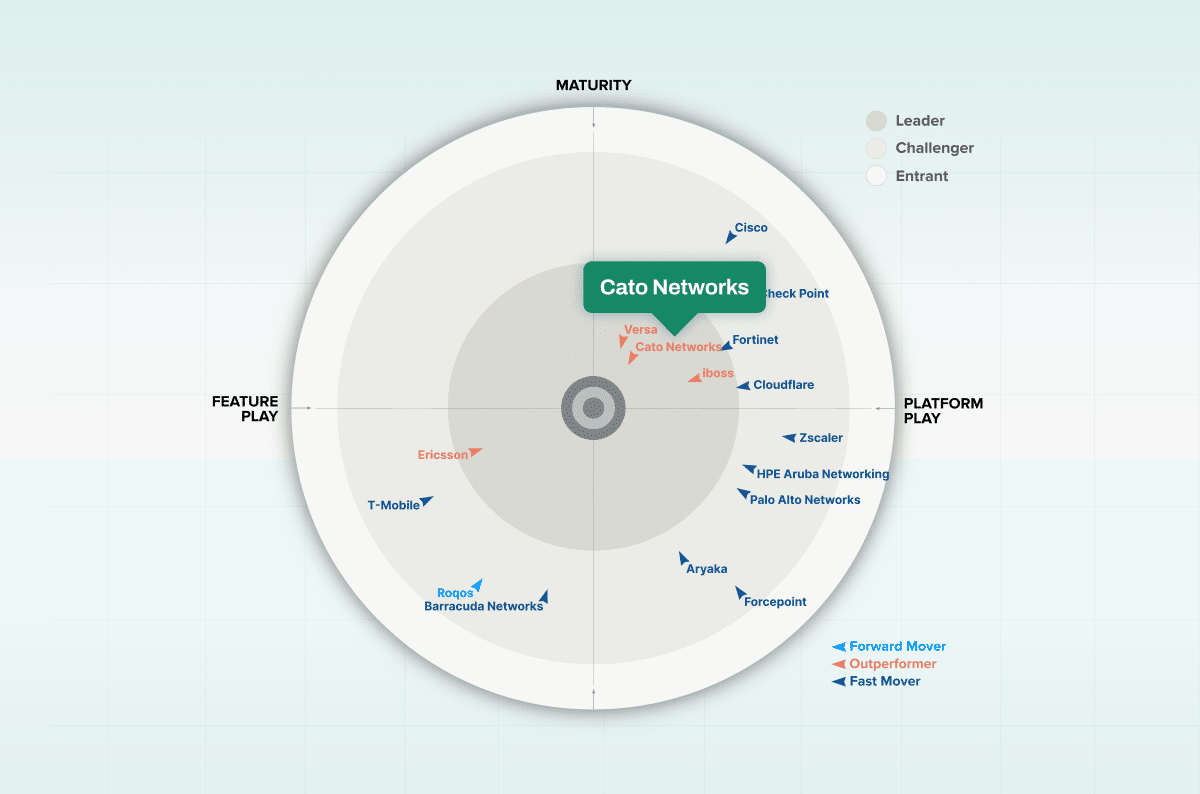
Cato Networks Named a SASE Industry Leader and Outperformer for the THIRD Consecutive Year

When Quantum Turns Encryption Into a Time Problem


Gradual by Design: What the Cloudflare Outage Reveals About Robust SASE Architecture and Operations