The Vulnerability Tax: What CVE Response Costs at the Network Edge

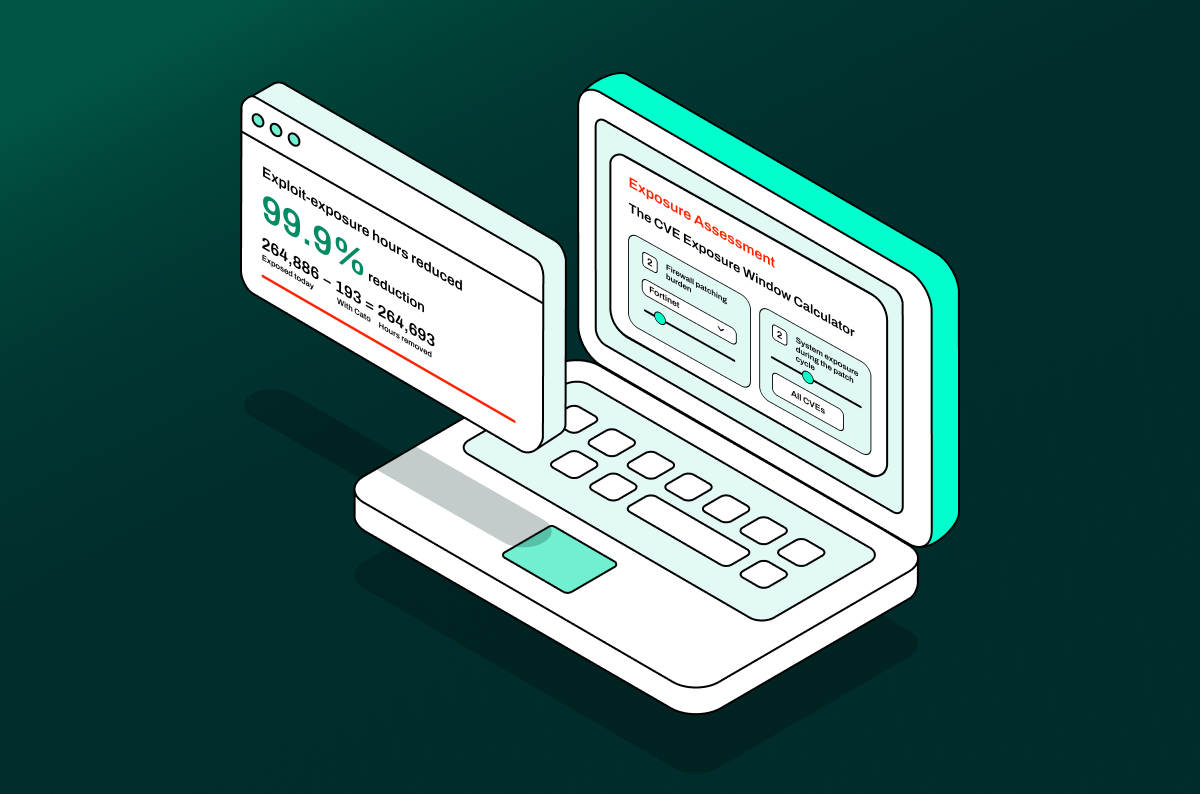
Table of Contents
|
Listen to post:
🔊 This audio player requires that "Preferences" cookies be accepted
|
Network edge vulnerabilities are accelerating. Cato’s cloud-native architecture reduces customers’ attack surface and shortens exposure to emerging vulnerabilities. The Cato CVE Exposure Calculator shows what that difference could mean for your organization.
Another Known Exploited Vulnerability (KEV). Another emergency CAB. Another weekend spent upgrading firmware. You have to respond. The question is how much each response costs the business.
Vulnerability exploitation has become the leading initial access vector, and network edge devices are a growing target. Internet-facing firewalls, VPN concentrators, and SD-WAN appliances are particularly exposed. When a critical vulnerability hits one of them, the security problem quickly becomes an IT operations problem.
Someone has to determine what’s affected, test the fix, prepare the change, get it approved, schedule the maintenance window, deploy it, and make sure nothing broke.
Then do it again for the next vulnerability.
That work is the vulnerability tax. The Security Risk Is Obvious. The Business Cost Is Easier to Overlook.
Every critical CVE and KEV triggers a familiar cycle. Whether the vulnerability is ultimately exploited or not, the cost of responding is paid every time.
IT time goes to maintenance instead of the business. Applying the patch is only one step. Teams must identify impacted systems, test the change, prepare rollback plans, secure CAB approval, deploy the update, and validate business services. The more appliances, software versions, and management layers an organization runs, the more often that work repeats.
That time would otherwise go toward modernizing infrastructure, M&A integration, improving resilience, and supporting emerging business requirements. Emergency response redirects scarce capacity from this planned work, creating delays that extend well beyond the maintenance window.
Patching is essential. But repeatedly turning vulnerabilities into emergency IT projects is an architectural problem.
Calculate your vulnerability tax with the Cato CVE Exposure CalculatorEvery Emergency Change Puts Availability in Play
High availability doesn’t eliminate maintenance. IT still has to upgrade nodes, validate failover, confirm application behavior, and be ready to roll back if something goes wrong.
The more appliances and software versions in the environment, the more often teams have to make those changes. And every emergency change introduces some risk to the service IT is trying to keep available.
The difference between four and five nines of availability is 47 minutes of annual downtime. Unplanned patching can consume that margin, putting a five-nines availability target at risk of falling to four nines.
Appliance-heavy architectures make that availability harder to preserve because every exposed device, software image, and management layer adds another component IT must maintain. A high volume of emergency changes can consume the margin designed into a high-availability environment.
That is the vulnerability tax: IT time spent responding, planned work pushed aside, and availability consumed maintaining the infrastructure meant to protect the business.
Architecture Determines Your Vulnerability Tax
Organizations cannot control vulnerability volume or exploitation speed. They can control how much internet-facing security infrastructure they own and therefore must secure, maintain, upgrade, and replace.
With traditional customer-managed security appliances, each affected product can mean another exposed asset to harden, vendor advisory to assess, software version to test, and maintenance window to schedule. The exposure extends beyond the CISA KEV catalog, including vulnerabilities affecting aging hardware and software.
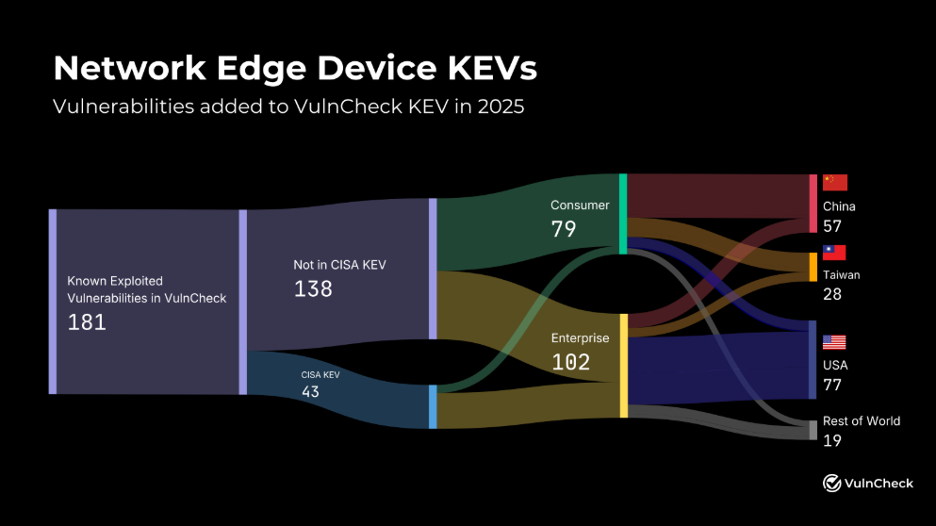
VulnCheck tracks exploited vulnerabilities beyond the CISA KEV catalog, including vulnerabilities affecting end-of-life hardware and end-of-support software (Country indicates manufacturer origin).
As hardware and software versions age out of support, the lifecycle burden grows. A vulnerability may require a major software upgrade, hardware replacement, or compensating controls instead of a straightforward patch. For organizations with large appliance estates, those exceptions can quickly become separate remediation projects.
The long-term answer is not simply to patch faster. It is to reduce the customer-managed perimeter systems that create both an attack surface and a lifecycle burden.
Cato Shifts the Work from Patching Infrastructure to Protecting Traffic
With customer-managed security appliances, IT owns the patch cycle. With Cato, the security stack runs in the Cato Cloud and Cato manages the underlying software lifecycle.
When a new vulnerability is being exploited, Cato CTRL, Cato’s security research team, can develop, test, and deploy protections across the Cato SASE Platform. Customers don’t have to schedule an upgrade across a fleet of security appliances to get that protection.
Cato also manages software updates for Cato Sockets. For IT, that means fewer products to patch, fewer maintenance windows, and less infrastructure lifecycle work. What Is the Upgrade Cycle Costing You?
Most organizations know how many emergency upgrades they handled last year. Few measure the full cost in IT time, planned downtime, missed service levels, and delayed initiatives.
A vulnerability may never be exploited. Responding to it still carries a cost.
Calculate your vulnerability tax with the Cato CVE Exposure Calculator.


Related Articles
Cato Networks and Armis Integration: Redefining Device Security Through Intelligence and Enforcement



The Future of Agentic Defense is Contextual